
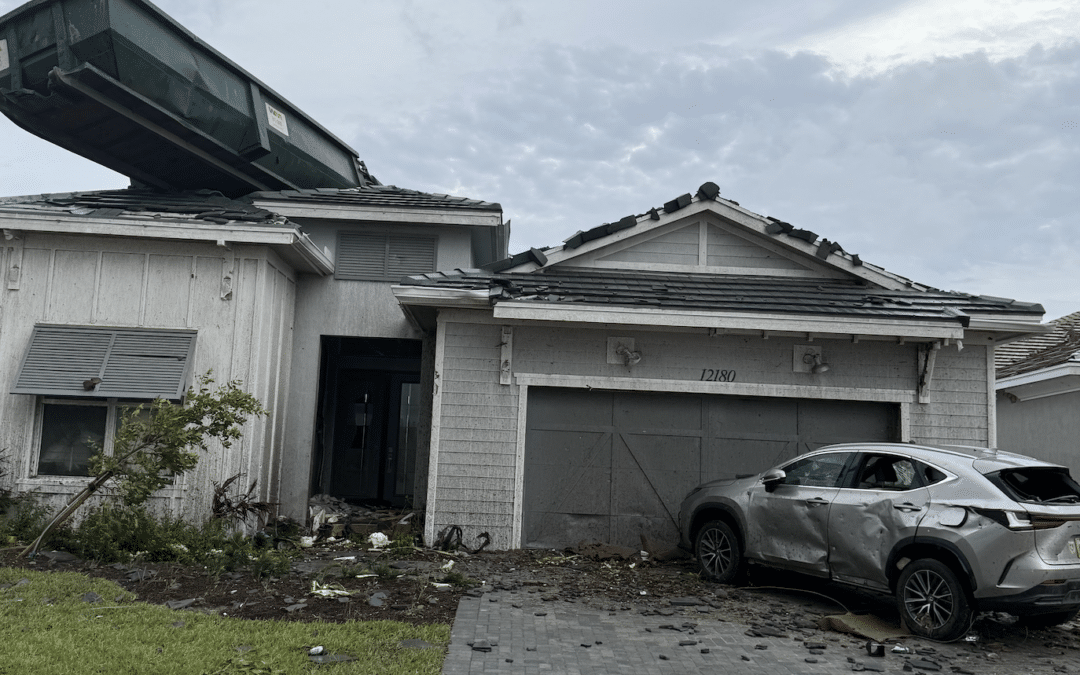
Hurricane season does not always leave the kind of damage you can point to right away. Sometimes the roof looks fine. The windows look fine. The garage door still opens.
But the door starts groaning. The track looks slightly off. The bottom seal suddenly leaks during heavy rain. Or you notice a dent that was not there before, and now the door “shimmies” when it closes.
That is exactly why so many homeowners across Florida start looking at Florida garage doors differently right after hurricane season. A garage door is a massive moving wall. When storms push wind, debris, and water against it, the damage can be subtle at first, then turn into a bigger failure later.
This blog explains:
- The most common types of storm damage that show up after hurricane season
- When garage door replacement makes more sense than repair
- What to look for if you are planning hurricane repairs
- How to choose the right door for Florida conditions (especially if you want glass)
Why the garage door takes such a beating during hurricane season
Your garage door is one of the largest openings on the home. During a storm, it faces:
- strong wind pressure pushing in and pulling out
- wind-driven rain that forces water into seams and seals
- flying debris that dents panels and knocks hardware out of alignment
- repeated cycling during power outages or emergency use, which stresses old parts fast
Even if your door never “blows in,” storm season can weaken the system. That matters because a garage door is only as strong as the tracks, rollers, hinges, brackets, anchors, and the way everything holds together under pressure.
If your door was already older, already noisy, or already sagging, hurricane season can turn “barely working” into “one more storm away from failing.”
The storm damage homeowners miss at first
A lot of post-storm issues are not obvious until weeks later. Here are the most common ones.
1) Panel dents and flexing that weaken the door
A dent might look cosmetic. But dents can change how panels distribute load. That can lead to more flexing, more vibration, and a door that no longer closes tightly. Over time, the door can lose the stiffness it needs to stay stable in high winds.
2) Track misalignment
Storm pressure can shift tracks slightly. A small shift is enough to cause:
- rubbing
- uneven roller movement
- door binding
- a door that “jerks” during operation
This is one of the biggest reasons doors start failing after hurricane season. People assume it is the motor, but it is often the door system fighting misalignment.
3) Roller and hinge wear that suddenly accelerates
Older rollers and hinges may already be worn. Add storm vibration and repeated use during outages, and the wear accelerates fast. That creates louder operation, wobbling, and uneven closing.
4) Bottom seal and side seal failure
Wind-driven rain finds weak points. Once the bottom seal is compromised, water intrusion becomes a recurring issue. If the door starts letting water in regularly, it is a sign the system is no longer sealing the way it should.
5) Rust and corrosion from salt air and moisture
After storms, Florida humidity stays high. In coastal areas, salt air makes it worse. Hardware corrosion can weaken brackets and fasteners, which matters a lot when you need the door to hold strong in the next storm season.
6) Opener strain and “door too heavy” problems
If the door is binding or sagging, the opener works harder. That can lead to:
- burned-out motors
- snapped cables
- broken springs
- sudden door drops
When homeowners replace the opener without fixing the door system, the problem usually comes right back.
When garage door replacement is the smarter move
Some repairs are worth doing. But after hurricane season, a lot of homeowners reach a point where replacement is the safer and more cost-effective choice.
Replace the door if you notice these signs
- The door shakes or wobbles when it opens or closes
- The panels look bowed, cracked, or visibly weakened
- The track is bent or repeatedly slips out of alignment
- You keep paying for repairs and the door never feels “right”
- The door does not seal properly anymore, even after adjustments
- You have rusted hardware, weakened anchors, or recurring cable issues
- Your door is older and was not built to meet today’s Florida wind requirements
Here is the practical truth. A door that is already compromised is not the door you want to rely on when the next storm shows up.
Why hurricane repairs often lead to a full garage door upgrade
After a storm, homeowners start with one goal: fix what broke. Then they realize something bigger.
They are not just trying to make the door open again. They are trying to:
- reduce the risk of failure next season
- improve sealing against wind-driven rain
- stop constant repairs
- upgrade the home’s exterior look and resale appeal
- choose a door that actually matches Florida conditions
That is why “hurricane repairs” often end in garage door replacement, especially when the old door was outdated or patched together over the years.
Florida garage doors: what to prioritize when choosing a replacement
If you are replacing a garage door in Florida, focus on function first. Style can come next.
1) Wind rating and structural strength
Your door should be designed for the wind pressures in your area. Florida is not one-size-fits-all. Coastal zones and certain counties have stricter requirements. The right door is the one that matches your region’s demands and your home’s opening size.
2) Impact resistance and storm readiness
Even if your last storm did not throw debris at your door, the next one might. A storm-ready door is built to handle the reality of Florida weather, not just a calm week in spring.
3) Hardware quality matters more than people think
Tracks, rollers, hinges, and reinforcement are where performance lives. If you want a door that stays stable under stress, do not treat hardware as an afterthought.
4) Sealing and water control
Look for a door that closes cleanly, seals properly, and is installed with attention to weather resistance. Wind-driven rain will test every gap.
5) If you want glass, make sure it is engineered for Florida conditions
Glass garage doors can be an incredible upgrade in Florida. They bring in light and modernize the exterior fast. But the system has to be built for real-world weather demands. That means the frame, the panels, and the full door assembly need to be designed for strength, not just style.
What the replacement process usually looks like
Homeowners often delay replacement because they assume it will be a long, messy project. In most cases, it is straightforward when handled properly.
A typical process includes:
- Measuring the opening and checking structural conditions
- Confirming local requirements and wind needs
- Selecting the door style and performance level
- Removing the old door and inspecting the mounting points
- Installing the new system with correct anchoring and alignment
- Testing balance, travel limits, safety features, and sealing
- Final walkthrough and maintenance guidance
If you are doing this after storm season, you are also doing one smart thing: replacing before the next emergency hits.
How to make sure your new door does not turn into next year’s problem
After you replace the door, protect the investment.
- Keep tracks clear and clean
- Watch for early signs of misalignment (rubbing, jerking, uneven closing)
- Replace worn rollers before they grind the track down
- Do not ignore new noises that suddenly appear
- If your door takes more force to open, stop using it and have it checked
A door that is properly installed and maintained should feel smooth. If it starts feeling rough, it is usually warning you early.
Replace your door before the next storm forces the decision
If hurricane season exposes weaknesses in your garage door, do not wait for the next storm to finish the job.
All Glass Garage Doors manufactures modern glass garage door systems built for Florida homes that want strength, clean design, and a door that feels solid every time it moves. Tell us your city and opening size, and we will help you choose the right replacement so you can move into the next season with a garage door you actually trust.
FAQs: Florida Garage Doors After Hurricane Season
1) How do I know if my garage door has storm damage?
Look for wobbling, new dents, loud grinding, uneven closing, gaps in the seal, or a door that suddenly feels heavier. Storm damage is not always dramatic. Often it shows up as misalignment, weakened panels, or hardware strain that builds over time.
2) Can I repair a hurricane-damaged garage door, or do I need replacement?
If the damage is minor and limited to a specific part, repair can work. But if the door is older, the panels are weakened, the tracks are bent, or the system keeps going out of alignment, garage door replacement is usually the smarter and safer choice.
3) Why does my garage door still open but feel “off” after hurricane season?
Because many issues do not stop the door immediately. Wind pressure and vibration can shift tracks, wear rollers faster, and weaken sections. The door can still operate, but it is operating under strain. That is when failures tend to happen later.
4) What is the most common hurricane-related garage door issue in Florida?
Track and hardware issues are extremely common. The door starts binding, shaking, or closing unevenly because the system is no longer aligned the way it was. Water intrusion through compromised seals is also a frequent post-storm problem.
5) Do glass garage doors hold up in Florida weather?
Yes, when they are engineered for Florida conditions and installed correctly. The key is choosing a door system built for strength and storm exposure, not a lightweight door that only prioritizes appearance.
6) When is the best time to replace a garage door in Florida?
Right after hurricane season is one of the best times, because you are replacing from a position of planning instead of panic. You have time to choose the right door, schedule properly, and avoid emergency pricing and rushed decisions.