
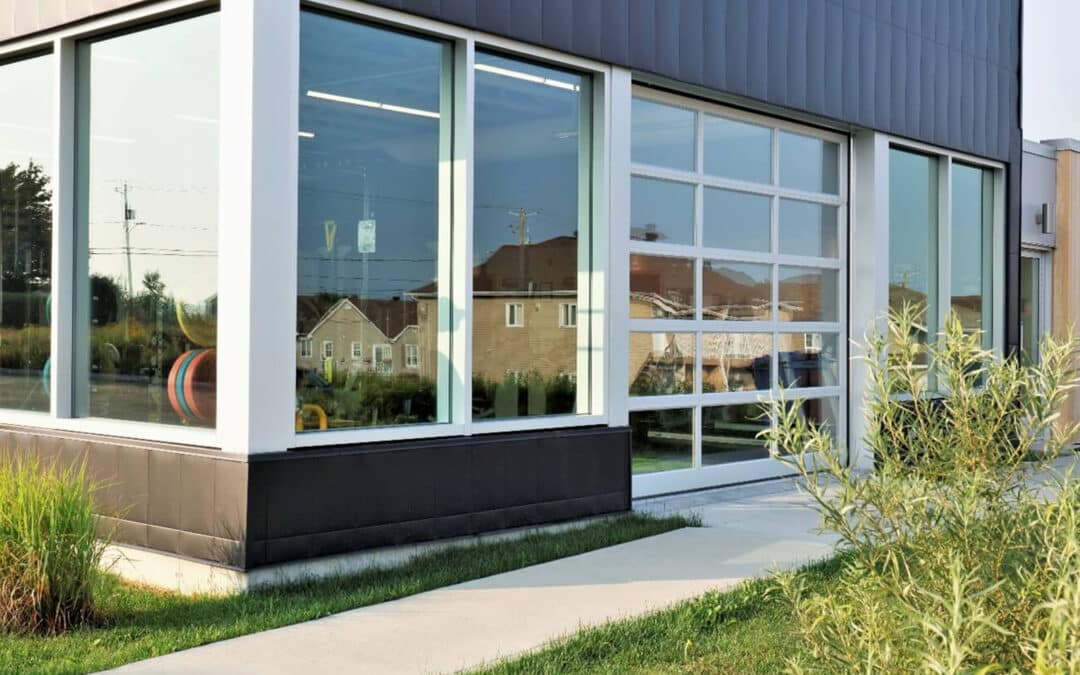
In a lot of commercial spaces, the garage door used to be invisible. It was just a metal barrier that opened in the morning, closed at night, and blocked out everything in between.
Today, that same opening is being treated very differently. Retailers, restaurants, showrooms, and mixed-use projects are turning it into one of the most important design decisions they make. Instead of solid metal, they are choosing commercial glass garage doors that act like moving storefronts, indoor-outdoor walls, and light sources all at once.
If your space still has a traditional overhead door or a tired security shutter, this shift affects you directly. The door is no longer just about loading and security. It is about how your business looks from the street, how it feels inside, and how well you can switch between open and closed, quiet and busy, daytime and evening.
This article walks through why so many commercial properties are making the change, where retail storefront doors and restaurant roll-up doors work best, and what to think about before you commit to a new commercial garage door design.
From “Back-of-House Hardware” To A Front-of-House Feature
For years, overhead doors were treated like warehouse equipment. They were designed to hide inventory and keep people out after hours. That thinking made sense for storage, but it works against customer-facing spaces.
Solid doors and shutters create three problems the moment you put them on the public side of the building:
- They make the space look closed, even when you are open
- They block the light you pay to bring in everywhere else
- They send a message that security comes before welcome
Commercial glass garage doors service reverse that pattern. Instead of hiding activity, they show it. Instead of turning a wall into a dead surface, they turn it into a transparent, flexible boundary that can open up in seconds.
In walkable districts and mixed-use areas in Miami and Fort Lauderdale, customers respond to that difference. A space with clear, bright visibility feels active and safe. One with heavy metal or solid panels often gets skipped unless someone is already determined to visit.
How Glass Roll-Up Doors Change the Customer Experience
Switching from a solid door to a glass system does more than update the look. It changes how people experience your business before they ever step inside.
Here are some of the biggest shifts companies see when they install commercial glass garage doors at the front or side of the space.
- Visibility that actually pulls people in
When people can see inside, they do not have to guess whether the place feels busy, quiet, clean, or welcoming. They can read the room from the sidewalk. That reduces hesitation. It is especially powerful for:
- Retail stores that rely on foot traffic and impulse stops
- Cafes and bars where people want to see the atmosphere
- Fitness studios and gyms where energy and activity matter
Instead of a flat surface with a logo, the interior becomes the advertisement.
- Natural light that changes how the space feels
Glass roll-up doors bring daylight deeper into the building. Staff stay more alert. Products look better. Surfaces read truer to their real color. Customers tend to linger longer in bright, comfortable spaces.
This is especially noticeable in:
- Long, narrow units that would otherwise feel dark near the back
- Corner locations that can open multiple sides toward the street
- Converted industrial spaces that benefit from softened, filtered light
- Easy indoor-outdoor transitions
For restaurants and hospitality concepts, restaurant roll-up doors can turn a standard dining room into an indoor-outdoor experience on good weather days. The line between bar, patio, and interior seating softens.
That flexibility matters when:
- You host events and want the space to feel larger
- You want to create seasonal experiences without full construction
- You need to adjust quickly when the weather changes
Customers remember how the space felt when they were there. Glass roll-up doors give you more control over that feeling without adding complicated operations.
Where Commercial Glass Garage Doors Make The Biggest Impact
Not every business uses these systems in the same way. The most successful projects match the door type to how the space is used every day.
Some of the most common applications include:
Retail storefront doors for modern brands
Shops that care about visual merchandising often treat the interior as a display. A glass roll-up frontage turns that into a living storefront. When the door is down, pedestrians can still see the layout and product stories. When it is up, the line between sidewalk and store almost disappears.
Restaurant roll-up doors for hospitality and dining
Cafes, breweries, bars, and restaurants use restaurant roll-up doors to:
- Open up bar seating to the street
- Connect interior tables with outdoor patios
- Create a more relaxed, resort-style atmosphere
Guests get airflow, views, and energy without feeling cut off from the outside.
Service and showroom spaces
Auto dealers, custom shops, and other service-oriented businesses use commercial glass garage doors to:
- Showcase vehicles or equipment without pushing them outside
- Maintain climate control while still letting in light
- Signal transparency and cleanliness in workspaces
For these businesses, the door is as much a part of the presentation as the floor and lighting.
Gyms, studios, and creative spaces
Fitness studios, art spaces, and coworking facilities often need a large opening for special events or classes. A glass roll-up door gives them:
- Room to breathe on crowded days
- A visible connection to the community outside
- More layout options when attendance fluctuates
The result is a space that feels adaptable rather than fixed in one configuration.
Operational Benefits Owners Do Not Always See At First
The visual impact is obvious. The operational benefits reveal themselves over time.
Businesses that install commercial glass garage doors often notice:
- Simpler changeovers between “open” and “event” modes
Staff can transform the feel of the space by opening or closing one system instead of hauling temporary walls, heavy partitions, or multiple doors. - Better use of the square footage you already pay for
When the boundary to the outside is flexible, patios, side yards, and covered exterior areas become more usable. That can reduce the pressure to lease more space. - Stronger branding at street level
The way a door looks and operates says something about the business. A well-designed commercial garage door design signals that you pay attention to details that customers notice.
When you add these factors together, the door becomes part of the business model, not just a building component.
What To Look For In Commercial Glass Garage Doors
Not every glass system is built for commercial use, and not every residential-style product will survive in a busy, high-traffic setting. Before you decide, it helps to know what to ask for.
Key points to consider include:
- Structure and hardware rated for commercial traffic
Daily opening and closing, busy weekends, deliveries, and service calls put real strain on tracks, rollers, and openers. Commercial-grade systems are designed for that level of use. - Glass type and safety
Tempered or laminated glass is the standard for commercial glass garage doors. The thickness, tint, and privacy level should match both safety requirements and how you plan to light and use the space. - Frame materials and finish
Frames need to resist corrosion, especially in coastal areas. Powder-coated aluminum, stainless components, and thoughtful hardware choices help the door stay clean and operational longer. - Security and after-hours appearance
Even transparent systems have to protect what is inside. Locking systems, structural design, and glass choice all play a role. You also need to think about how the business looks at night when the door is closed but still visible from the street. - Local code, wind, and load requirements
In regions with strict building codes, wind and impact requirements matter. Your commercial garage door design should be reviewed with local conditions in mind, not just sample photos from a different climate.
Working with a specialist that understands these factors is what keeps a beautiful concept from turning into a maintenance problem later.
Where All Glass Garage Doors Fits In
All Glass Garage Doors focuses specifically on designing and manufacturing glass-based door systems. That specialization matters for commercial work, where looks, performance, and durability have to come together in one product.
For businesses considering commercial glass garage doors, that can mean:
- Doors sized and configured for real storefront openings, not just catalog dimensions
- Frame and glass options that support branding, light control, and privacy
- Systems designed with commercial traffic and local conditions in mind
The goal is not to sell a single style, but to match the right glass door solution to how your space actually operates.
Rethinking The Front Of Your Business
If your current door shuts out light, hides your activity, or makes your storefront look closed even when you are open, it might be working against everything else you have invested in.
The move toward commercial glass garage doors is not a trend on paper. It is a response to how people now choose where to eat, shop, and spend time. They read spaces visually, they respond to light and openness, and they remember where they felt welcome.
If you are planning a remodel or new commercial build in Miami or Fort Lauderdale, this is the moment to look at that opening again. The right glass roll-up system can turn it from a necessary piece of hardware into one of the strongest parts of your brand.
All Glass Garage Doors designs and manufactures glass garage door systems for commercial projects that want that kind of impact. When you are ready to talk about how a new storefront, roll-up, or flexible opening could change your space, they are the partner that understands both the design side and the demands of daily use.
FAQs: Commercial Glass Garage Doors For Businesses
Why are commercial glass garage doors becoming popular for businesses?
Many retailers, restaurants, and showrooms are switching to commercial glass garage doors because they turn a plain opening into a feature. Instead of a solid barrier, you get visibility from the street, more natural light inside, and a cleaner, modern look that matches updated storefront design.
Are commercial glass garage doors secure enough for a retail storefront?
Yes. When they are built for commercial use, these doors use tempered or laminated glass, strong frames, and appropriate locking systems. A well designed glass storefront door can provide security while still allowing customers to see in, which often deters problems rather than causing them.
How do restaurant roll-up doors help hospitality businesses?
Restaurant roll-up doors let you open a dining room directly to a patio, sidewalk, or street-facing area. They create an indoor outdoor feel, improve airflow on good weather days, and give guests a more relaxed experience. When the doors are closed, the glass still shows off the interior and keeps the restaurant feeling bright.
Can commercial glass garage doors work for showrooms and service spaces too?
They can. Showrooms and service businesses use commercial glass garage doors to keep vehicles, equipment, or displays visible without pushing everything outside. Customers can see activity and cleanliness inside the space, which builds trust and makes the business feel more professional.
Do glass roll-up doors help with branding and store design?
A thoughtful commercial garage door design can reinforce your brand. You can match frame colors to your existing storefront, choose glass that fits your lighting and privacy needs, and treat the interior like a living display. For many modern brands, the door becomes part of the visual identity, not just a functional panel.
Are commercial glass doors suitable for all climates?
They need to be specified correctly for the location. In coastal or high sun areas, you may need particular finishes, glass options, and hardware that handle UV exposure, humidity, and wind. When you work with a company that understands commercial glass systems, those conditions are factored into the design from the start.
What should I look for when choosing commercial glass garage doors for my business?
There are several points to consider before you commit. You will want to confirm the door is rated for commercial traffic, uses appropriate glass, has hardware built for frequent use, and meets local code requirements. It is also worth asking how the door will look after hours, since customers see your exterior even when you are closed.
Are glass storefront doors hard to maintain?
Maintenance usually involves basic cleaning of glass and frames plus routine checks of hardware, tracks, and openers. Commercial glass garage doors are designed for daily use, so as long as they are installed properly and inspected periodically, upkeep is manageable. Many businesses pair installation with a simple service plan for peace of mind.
How do commercial glass doors compare in cost to standard metal doors?
Up front, commercial glass garage doors are often more of an investment than a basic solid metal door. The difference is that they also work as a storefront element, light source, and design feature. For many businesses, the added curb appeal, visibility, and customer experience justify the higher initial cost.
Can I customize the look of my glass roll-up doors?
Yes. That is one of the reasons businesses choose them. You can select frame colors, glass types, panel layouts, and overall dimensions that fit your space. Whether you need retail storefront doors that feel open and inviting or restaurant roll-up doors that turn a wall into an opening, the design can be tailored to your brand and floor plan.