
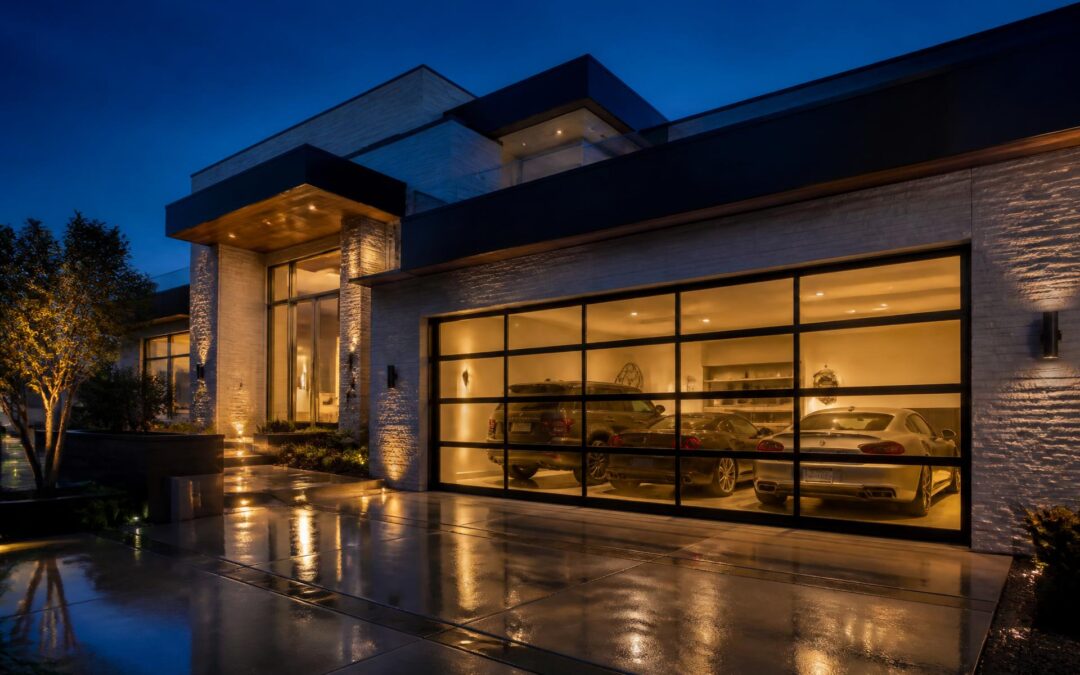
A large opening can completely change how customers experience a restaurant, brewery, or retail space. Opening the front of a dining room to a patio can make the space feel larger. A brewery can connect its taproom with an outdoor seating area. A retail store can bring more daylight inside and create a storefront that feels open even when the doors are closed.
The challenge is that a commercial garage door has to do much more than look good in architectural photos. It may be opened and closed throughout the day, exposed to Florida heat and storms, positioned near customers, and expected to provide security after business hours. Glass choice, door size, operating hardware, insulation, wind requirements, and the way the opening fits into daily operations can all affect whether the finished installation works as intended.
Getting those decisions wrong can create recurring maintenance problems, uncomfortable interiors, operational delays, or a door that does not provide the protection the property requires.
Before choosing commercial glass garage doors based primarily on appearance, Florida business owners should consider how the door will function during business hours, after closing, and throughout changing weather conditions.
Why Businesses Use Glass Garage Doors Instead of Fixed Storefronts
A traditional storefront window provides visibility and daylight, but it remains in place. A commercial glass garage door can provide many of those same visual benefits while allowing an entire section of the building to open.
That flexibility creates opportunities that fixed glass cannot.
For a restaurant, opening the door can connect indoor tables with a covered patio. Breweries can expand a taproom during busy periods or special events. Retail businesses can create a wider connection between the sales floor and an outdoor display or pedestrian area.
When closed, full-view glass panels can continue bringing natural light into the space and maintain visual access to merchandise, interior architecture, or activity inside.
The appeal is therefore not simply that the door looks modern. It is that one building opening can serve different purposes throughout the day.
That flexibility becomes valuable only when the door is designed around how the business actually operates.
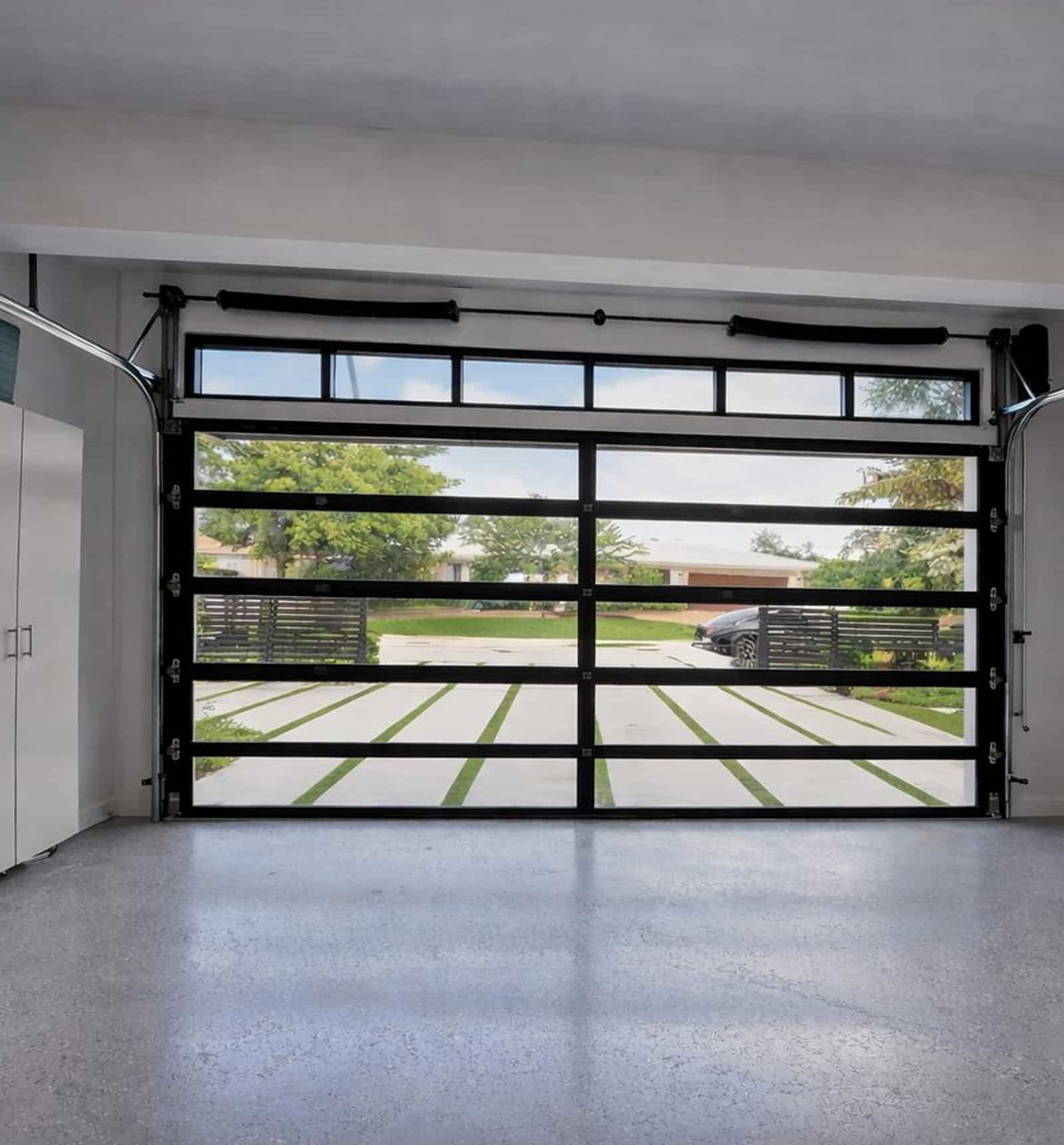
Restaurants Can Create a More Flexible Dining Area
Florida restaurants often benefit from outdoor dining, but separating indoor and outdoor seating too sharply can make the two areas feel disconnected.
A glass garage door can create a large transition between them.
When conditions are comfortable, raising the door can make a patio feel like an extension of the dining room. When rain, excessive heat, wind, or other conditions make an open environment less practical, the door can be closed without replacing the opening with an opaque wall.
This can work particularly well for:
- Restaurants with covered patios
- Cafes
- Food halls
- Hotel restaurants
- Waterfront dining spaces
- Casual dining concepts
- Event and hospitality venues
The opening should still be planned around customer circulation. Tables, chairs, servers, equipment, and decorative elements need enough clearance so the door can operate without interfering with normal service.
A beautiful door that requires employees to rearrange half the dining room every time it opens quickly becomes an operational problem.
Breweries Can Connect Taprooms With Outdoor Spaces
Breweries are another natural application for commercial glass doors because their spaces often need to change throughout the day.
A taproom might have modest traffic on a weekday afternoon and become significantly busier during a weekend event. Being able to connect indoor and outdoor areas gives operators another way to adjust how customers move through the property.
A glass door can also preserve visibility when closed. Customers outside can still see the activity inside, while people in the taproom retain a visual connection to the patio or surrounding property.
For breweries with an industrial design, aluminum-framed full-view doors can also work naturally with exposed structures, concrete floors, metal finishes, and open ceilings.
However, the appearance of the door should not distract from practical questions.
A brewery may open and close the door frequently, making cycle frequency, hardware, balance, opener selection, and routine maintenance more important than they might be for a door that operates only twice per day.
Retailers Can Turn the Door Into Part of the Storefront
Retail businesses use glass differently from restaurants and breweries.
For a store, visibility itself can be valuable.
A full-view door can display interior merchandise and make the sales floor visible to people passing outside. Depending on the building design, the door may function almost like a large storefront window while the business is open or closed.
During special events, product launches, markets, or promotional periods, raising the door can create a larger entrance and make the store feel connected to pedestrian areas outside.
Applications can include:
- Clothing and lifestyle retailers
- Furniture stores
- Bicycle shops
- Automotive showrooms
- Fitness studios
- Specialty retailers
- Galleries
- Mixed-use commercial spaces
Privacy may be less important for a retail storefront than it would be for a residential garage, but glass selection still matters.
Clear glass provides maximum visibility. Frosted sections can obscure storage or back-of-house areas. Tint can change the appearance of the storefront and affect how much direct light enters.
The best configuration depends on what you want customers to see.
Natural Light Can Improve the Space, but Florida Sun Matters
One of the biggest attractions of commercial glass garage doors is the amount of daylight they can introduce into a building.
That natural light can make a restaurant feel more open, brighten a taproom, and improve visibility within a retail environment.
In Florida, however, daylight and solar exposure need to be considered together.
A large west-facing glass opening can receive substantial afternoon sun. Depending on the glass configuration, surrounding shade, interior cooling system, and building orientation, that exposure can affect comfort near the door.
Businesses should therefore avoid choosing glass based only on transparency.
Questions worth considering include:
- What direction does the opening face?
- How many hours of direct sunlight reach it?
- Will customers sit directly beside the door?
- Is the interior air-conditioned?
- Does an overhang or neighboring building provide shade?
- Would insulated or specialized glazing make sense?
- How much visible light does the business actually want?
Insulated glass options can help address heat transfer through the door, while tint, glass composition, shading, and other design choices can affect how the opening interacts with Florida sunlight.
The right balance depends on the specific property.
Commercial Glass Garage Doors Still Need to Provide Security
An inviting storefront during business hours needs to become a secure building opening after closing.
That makes security an important part of selecting a commercial glass door.
Glass type is only one consideration. The complete system includes the framing, track, locking arrangements, hardware, operator, and attachment of the door to the structure.
A business storing valuable merchandise or equipment may have different security priorities from a restaurant where most customer-facing areas are cleared each night.
Laminated glass can provide different breakage behavior from standard tempered glass, but business owners should discuss the actual security goals of the project rather than assuming that one type of safety glass automatically makes a complete door intrusion-resistant.
Visibility can also work both ways. A clear storefront allows customers to see inside, but it may also make inventory and equipment visible after hours.
Tinted, frosted, laminated, or other glass configurations can be considered where privacy and security concerns overlap with architectural goals.
Florida Wind and Impact Requirements Cannot Be an Afterthought
A commercial door in Florida has to be selected for the conditions and code requirements that apply to the particular building and location.
Those requirements are especially important when a large portion of the door is glass.
Florida’s building regulations include provisions for exterior glazed openings and garage doors in wind-borne debris regions. Applicable protection and design requirements depend on factors such as location, building characteristics, design pressures, and the specific door system.
That means a product being described generally as a glass garage door, hurricane door, or impact door is not enough information by itself.
Before ordering, project teams may need to verify the specific product approval, impact classification, design pressures, dimensions, installation requirements, and whether the configuration is appropriate for the building.
This is one area where aesthetics should come after performance requirements are understood.
Door Size and Daily Operation Affect the Design
Commercial openings can be considerably larger than typical residential garage doors, and that size affects the entire operating system.
A larger glass door can be heavier. The weight, dimensions, frequency of operation, track configuration, springs, operator, and available overhead space all have to work together.
Restaurants and breweries should also think about when the door will move.
Will employees open it once each morning?
Will it operate several times as weather changes?
Will it need to close quickly when afternoon rain arrives?
Will customers regularly be sitting or standing near the opening?
These are operational questions, not simply installation questions.
If a door becomes inconvenient to use, employees may stop using it the way the business originally intended. Planning around real daily routines helps prevent an expensive architectural feature from becoming something that stays closed most of the time.
Maintenance Matters More When a Door Operates Frequently
A commercial garage door is a moving system, and repeated use creates wear.
Restaurants, breweries, and retailers should include the door in routine property maintenance rather than waiting until it becomes noisy, difficult to move, or unable to close.
Typical areas that may require inspection include:
- Rollers and tracks
- Springs and counterbalance components
- Hinges and fasteners
- Weather seals
- Door alignment
- Glass and framing
- Automatic operators
- Safety devices
- Locks and access controls
Coastal Florida properties may also need to pay closer attention to salt and moisture exposure on metal components.
Cleaning matters as well. Glass positioned near customer areas needs to remain presentable, particularly in restaurants and retail settings where fingerprints, rain spots, dust, and exterior residue can quickly affect appearance.
Planning the Right Commercial Glass Door for Your Business
The best commercial glass garage door is not necessarily the largest, clearest, or most dramatic option available.
It is the one that supports what happens inside the business.
A restaurant may prioritize a smooth connection to its patio. A brewery may need a durable door that operates regularly during events. A retailer may care most about storefront visibility after closing. Another business may need greater privacy, insulation, or storm performance.
Before choosing a configuration, consider the opening size, customer traffic, glass type, sun exposure, frequency of operation, security requirements, building conditions, and applicable Florida performance requirements together.
All Glass Garage manufactures custom commercial and residential glass garage doors with multiple glass, frame, insulation, and design configurations. For Florida commercial projects, defining how the opening needs to function before choosing its appearance can help create a door that supports both the architecture and the day-to-day business behind it.
Frequently Asked Questions About Commercial Glass Garage Doors
Are glass garage doors good for restaurants?
They can work well for restaurants that want to connect indoor dining with patios or outdoor spaces. The opening should be planned around seating, server circulation, weather exposure, cooling, safety, and how frequently the door will operate.
Why do breweries use glass garage doors?
Glass garage doors allow breweries to open taprooms to patios while retaining natural light and visibility when the doors are closed. They also complement the industrial architecture commonly used in brewery spaces.
Can a commercial glass garage door be insulated?
Yes. Commercial glass doors can be designed with insulated glass configurations depending on the manufacturer and door system. Insulation may be particularly useful for air-conditioned Florida businesses with large exterior glass openings.
Can commercial glass garage doors use tinted or frosted glass?
Yes. Tint and frosting can be used to modify visibility, privacy, daylight, and appearance. Different areas of a commercial property may also benefit from different levels of transparency.
Are commercial glass garage doors impact resistant?
Some systems can be manufactured with impact-resistant configurations, but not every glass garage door is impact rated. The specific door system, glass, approval, dimensions, and installation requirements must be verified for the project.
Do glass garage doors meet Florida hurricane requirements?
Some products may be designed and approved for applicable Florida wind or impact requirements, but compliance depends on the specific product and building location. Exterior glazed openings in applicable wind-borne debris areas are subject to Florida Building Code provisions.
How often should a commercial garage door be serviced?
There is no universal schedule for every business. Inspection frequency should reflect the manufacturer’s recommendations, operating cycles, environmental exposure, and condition of the door. High-use commercial doors may require more frequent attention than doors opened only occasionally.
Can a glass garage door be used as a storefront?
Yes, depending on the building design and applicable requirements. Full-view glass doors can provide storefront visibility while also allowing the opening to be raised when the business wants a larger connection to the exterior.
Do commercial glass doors make restaurants hotter?
They can contribute to heat gain depending on glass specifications, door orientation, shading, and sun exposure. Florida businesses should consider thermal performance and solar exposure when planning large glazed openings.
Are glass garage doors secure after business hours?
Security depends on the complete door configuration, including glass type, framing, locks, hardware, operator, and installation. Businesses should define their security needs before selecting the system rather than relying on appearance alone.
How much do commercial glass garage doors cost?
Cost depends on opening size, glass type, insulation, framing, impact or wind requirements, hardware, operator, custom finishes, and installation conditions. Large custom commercial openings generally require project-specific pricing.
Can an existing commercial opening be converted to a glass garage door?
Potentially, but the structure and opening need to be evaluated first. Headroom, side room, structural attachment, electrical requirements, door weight, code considerations, and the desired track configuration can all affect whether a conversion is practical.