
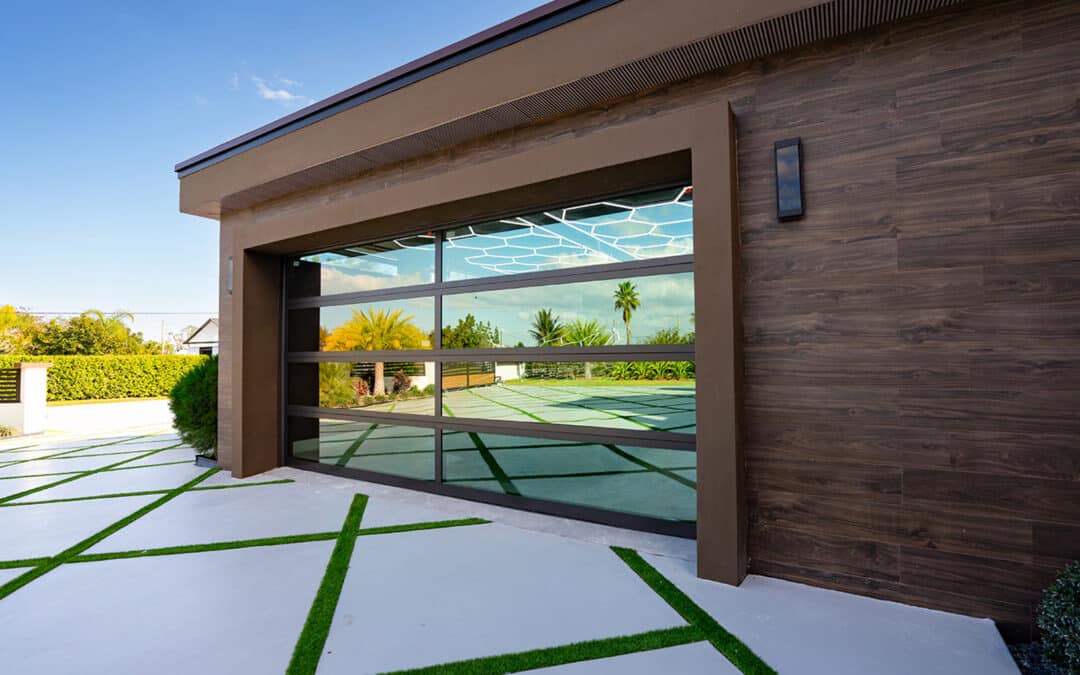
A glass garage door can give a Florida home a bright, modern appearance, but the decision becomes more complicated once you start thinking about the heat outside. A large section of glass facing the afternoon sun may look impressive from the driveway while raising questions about how comfortable the garage will feel inside.
That concern matters even more if you use the garage as a gym, workshop, hobby room, laundry area, or another space where you regularly spend time. Choosing glass based only on appearance can leave you with a garage that gains more heat than expected, while paying for insulation without considering the rest of the space may deliver less benefit than you hoped.
Insulated glass garage doors can reduce heat transfer compared with basic single-pane glass, but the number of panes alone does not determine how energy efficient the finished garage will be. Glass performance, solar exposure, framing, weather sealing, garage construction, and how you use the space all influence the result.
Understanding those factors will help you decide what level of insulation makes sense for your Florida home and where an upgraded glass door can actually improve comfort.
What Makes an Insulated Glass Garage Door Different?
An insulated glass garage door uses more than a single sheet of glass to separate the garage from outdoor conditions. Depending on the product, the panels may contain two or more panes with a sealed space between them.
That construction is intended to slow heat transfer through the glass.
A basic single-pane panel creates only one layer between the outdoor environment and the garage. Adding another pane and an insulating space creates additional resistance to heat moving through the door.
All Glass Garage states that its glass garage doors can be configured with double- or triple-pane insulated glass, with the available R-value depending on the glass construction and number of panes.
However, insulation should be evaluated as part of the complete door rather than by looking only at the center of the glass panel. Frames, joints, seals, and other parts of the assembly also affect how easily heat and air move between indoors and outdoors.

Why Energy Efficiency Works Differently in Florida
Homeowners in colder parts of the country often think about insulation primarily as a way to keep heat inside. In Florida, the challenge is frequently the opposite.
You are usually trying to limit unwanted outdoor heat from entering the garage.
Two different types of heat transfer can affect that goal.
The first is heat moving through the garage door because the outdoor surface is warmer than the indoor surface. Insulation can help slow that transfer.
The second is solar heat entering through the glass when sunlight strikes the door. That issue becomes especially important with large glass surfaces.
ENERGY STAR uses two common measurements to evaluate the performance of windows and glazed doors: U-factor, which measures heat transfer, and solar heat gain coefficient (SHGC), which indicates how much solar heat passes through the glazing. Lower U-factor values indicate better insulation, while lower SHGC values mean less solar heat is transmitted through the glass.
Although a garage door is not the same product as a residential window, these principles explain why simply adding another pane of glass does not tell you everything about hot-climate performance.
How Much Does Garage Door Orientation Matter?
The direction your garage faces can substantially change the conditions the door experiences.
A garage door shaded for much of the day may have very different thermal demands from one exposed directly to intense afternoon sun.
West-facing glass is particularly worth evaluating carefully because the sun can strike that surface during some of the hottest hours of the day. ENERGY STAR similarly notes that east- and west-facing windows can benefit from lower solar heat gain in warm climates, with west-facing glazing receiving strong summer exposure later in the day.
Consider what happens at your property between midday and early evening.
If the garage door sits beneath a deep overhang or is shaded by surrounding structures, landscaping, or the home’s orientation, solar exposure may be relatively limited.
If the door receives hours of unobstructed Florida sun, glass specifications that address solar heat gain may become more important.
That is why two homeowners purchasing visually similar insulated glass garage doors can experience different levels of indoor comfort.
Insulated Glass Does Not Fix an Uninsulated Garage
Upgrading the garage door can improve one part of the building envelope, but heat does not enter a garage through the door alone.
The ceiling, walls, windows, side doors, attic space, gaps around penetrations, and air leakage around the garage door can all affect indoor temperature.
Imagine installing a highly insulated door while the ceiling above the garage has little insulation and hot attic air affects the space throughout the afternoon. The garage may still become uncomfortable.
The same problem can occur when worn weather seals allow substantial outdoor air to enter around the perimeter of the door.
This does not make an insulated door pointless. It means you should consider where the biggest sources of heat gain are before assuming one upgrade will transform the entire garage.
For an attached garage, air sealing at interfaces with conditioned areas can also matter. The U.S. Department of Energy notes that gaps where unfinished garages meet conditioned portions of a house are areas that can be sealed as part of improving the building envelope.
When Insulated Glass Garage Doors Make the Most Sense
Not every garage needs the same level of thermal performance. How you use the room should have a major influence on the decision.
Insulation becomes more relevant when temperature changes inside the garage affect your comfort or the spaces around it.
You may place greater value on insulated glass if your garage is:
- Used regularly as a home gym
- Set up as a workshop or hobby area
- Frequently occupied for extended periods
- Mechanically cooled where permitted and appropriate
- Located below or beside conditioned living spaces
- Used to store items that benefit from more moderate temperatures
- Exposed to prolonged direct sunlight
If you open the garage only to park a vehicle and rarely spend time inside, the comfort improvement may be less valuable than it would be for someone who works in the garage every afternoon.
The key question is not simply whether insulation works. It is whether improved thermal performance solves a problem you actually have.
Does More Glass Mean Worse Energy Efficiency?
A large glass garage door introduces different thermal considerations than a heavily insulated solid door.
Glass is being selected partly because homeowners want natural light and a specific architectural appearance. Those benefits have to be balanced against heat transfer and solar exposure.
That does not mean every glass garage door is automatically inefficient.
Modern glazing can be built in different configurations, and insulated glass can perform considerably differently from a basic single-pane panel. What matters is the specification of the particular system.
For Florida homeowners, it is useful to compare more than a marketing description such as “insulated.”
Ask what type of glazing is being used, how many panes are included, whether performance information is available, and how the framing and seals contribute to the entire assembly.
A visually similar door can perform differently depending on what is behind the appearance.
Can Tinted or Frosted Glass Help With Florida Sun?
Privacy glass and insulated glass solve different problems, although they can sometimes be combined in one door configuration.
Frosted glass primarily changes visibility and diffuses light. Tinted glass changes how much visible light passes through and can alter the appearance of the door.
Neither term automatically tells you the door’s thermal performance.
If solar heat is a major concern, ask specifically about the glazing’s heat-control properties rather than assuming a darker or more opaque panel will automatically provide better insulation.
All Glass Garage offers insulated, tinted, and frosted glass configurations, which means homeowners can consider privacy, appearance, natural light, and insulation as separate parts of the specification rather than treating them as one decision.
This can be particularly useful when you want privacy or a darker architectural look without overlooking the way the glass performs in Florida conditions.
How Important Are Weather Seals and the Door Frame?
Even good glass cannot compensate for significant gaps around a garage door.
Heat and humid outdoor air can enter through damaged bottom seals, poorly fitting perimeter weatherstripping, joints between door sections, and other openings.
The frame also creates thermal pathways that differ from those through the insulated glass itself.
When comparing doors, it is therefore useful to think of energy performance as a system:
- Glass construction
- Aluminum or other framing
- Section joints
- Perimeter seals
- Bottom seal
- Installation quality
- Garage wall and ceiling insulation
- Sun exposure
Focusing on one number while ignoring the rest of the assembly can lead to unrealistic expectations.
Will an Insulated Glass Garage Door Lower Your Electric Bill?
It may contribute to lower cooling demand in certain situations, but homeowners should be cautious about expecting a specific savings percentage from the garage door alone.
The financial impact depends heavily on how the garage relates to the conditioned portion of the home.
If the garage is unconditioned and thermally separated from the house, improving the door may have a limited direct effect on household air-conditioning costs.
If the garage is frequently cooled or has significant interaction with adjacent conditioned areas, improved thermal performance may matter more.
ENERGY STAR reports energy savings from qualifying windows, doors, and skylights as part of the residential building envelope, but those figures should not be transferred directly to a garage door installation.
For a garage door, comfort, reduced temperature swings, and improved usability may be just as important as direct utility savings.
What Should You Ask Before Choosing Insulated Glass?
Once you know you want a modern glass door, compare specifications before deciding how much insulation you need.
Useful questions include:
- Is the glass single-, double-, or triple-pane?
- Is an R-value or other thermal-performance rating available?
- How does the complete door assembly perform?
- Does the glass include features intended to manage solar heat?
- How much direct sunlight reaches the door?
- What frame and panel configuration is being used?
- How well is the door sealed around the perimeter?
- Is the garage itself insulated?
- Is the garage regularly occupied or cooled?
- Are there wind or impact requirements for the property?
Florida homeowners should also separate energy efficiency from storm performance. Insulated glass is not automatically impact-resistant, and impact-resistant glass is not automatically the most energy-efficient option.
Those are separate performance characteristics that may need to be addressed together in the final specification.
Are Insulated Glass Garage Doors Worth Considering in Florida?
Insulated glass garage doors can improve thermal performance compared with basic single-pane glass, particularly when the garage is frequently used, receives substantial outdoor exposure, or needs more stable indoor temperatures.
But the most effective choice depends on more than the word “insulated.”
Florida sun exposure, solar heat gain, glass construction, weather sealing, the garage’s own insulation, and how the space is used all influence whether the upgrade delivers meaningful benefits.
For homeowners who want the architectural appearance and natural light of glass without ignoring comfort, comparing those factors before selecting a door is far more useful than choosing based on pane count alone.
All Glass Garage manufactures custom glass garage doors with double- and triple-pane insulated options alongside privacy, tint, frame, and other design choices. Evaluating those specifications against your home’s orientation and the way you use your garage can help you select a door that balances appearance with practical Florida performance.
Frequently Asked Questions About Insulated Glass Garage Doors
Are insulated glass garage doors actually energy efficient?
They can be more thermally efficient than comparable single-pane glass doors because multiple panes and insulating spaces help slow heat transfer. Actual performance depends on the complete door, including glass, framing, seals, installation, and solar exposure.
What is the best type of insulated glass for a Florida garage?
There is no single best configuration for every home. Florida homeowners should consider insulation along with solar heat gain, direct sun exposure, privacy, storm requirements, and how frequently the garage is occupied.
Are double-pane garage doors enough for Florida?
Double-pane glass may provide a useful improvement over single-pane glass, but whether it is sufficient depends on the property and intended use. A frequently occupied west-facing garage may have different needs from a shaded garage used only for parking.
Is triple-pane glass better than double-pane glass?
Triple-pane construction can provide additional insulating capability, but greater insulation is not automatically the best value for every Florida garage. Product specifications, solar performance, weight, cost, and the rest of the garage envelope should also be considered.
What does R-value mean for a glass garage door?
R-value describes resistance to heat flow. Generally, a higher R-value indicates greater resistance to heat transfer. When comparing products, make sure you understand whether the stated value applies to the glass, a door section, or the complete door system.
Will an insulated garage door keep my garage cool?
It can slow heat transfer, but it cannot prevent all heat gain. Direct sunlight, uninsulated walls and ceilings, air leakage, vehicles entering while hot, and frequent door opening can still raise garage temperatures.
Does tinted glass make a garage door more energy efficient?
Not automatically. Tint affects visible light and may be part of a heat-control glazing system, but the appearance of the tint alone does not establish thermal performance. Check the specifications of the actual glass product.
Is frosted glass insulated?
Frosting refers to privacy and appearance rather than insulation. A frosted panel can be part of an insulated glass configuration, but homeowners should verify the construction of the specific door.
Should I insulate my garage before buying an insulated glass door?
It is worth evaluating the entire garage. If walls, ceilings, attic interfaces, or perimeter gaps allow substantial heat transfer, addressing those areas may help you get more value from an insulated door.
Can insulated glass also be impact resistant?
Potentially, depending on the specific glass and door system. Insulation and impact resistance are different characteristics, so homeowners should verify both separately rather than assuming one provides the other.
Are insulated glass garage doors useful for home gyms?
They can be especially valuable when a garage is occupied regularly because reducing heat transfer can help moderate indoor conditions. Sun exposure, ventilation, air conditioning, ceiling insulation, and other factors still affect comfort.
Will insulated glass garage doors reduce my energy bill?
They may reduce heat transfer, but savings vary too much to guarantee a particular reduction in household energy costs. The effect depends on whether the garage is conditioned, how it connects to the house, its exposure, and the efficiency of the rest of the building envelope.