
Replacing a garage door in West Palm Beach is not the same process as replacing one in most other parts of the country. Florida’s Building Code, Palm Beach County’s local amendments, and the state’s hurricane protection requirements add a layer of compliance that turns what looks like a straightforward installation into a regulated project with specific documentation, inspection, and product approval requirements.
Homeowners who skip this process, or work with a garage door company in West Palm Beach, FL that treats permits as optional, risk more than a fine. They risk an installation that does not meet wind load requirements, a door that cannot be verified as code-compliant during a home sale, and an insurance or warranty claim that gets denied because the work was not inspected and approved.
This guide covers what the permit process actually requires in West Palm Beach, how Palm Beach County garage door code intersects with the Florida Building Code, what NOA approval means and why it matters, what happens during a garage door inspection, and what to look for in a contractor to make sure the compliance side of the project is handled correctly from the start.
Why Garage Door Replacement Requires a Permit in West Palm Beach
A garage door is not a cosmetic upgrade in the eyes of Florida’s building authority. It is a structural component of the home’s exterior envelope, and in a hurricane-prone state, the garage door is one of the most critical points of vulnerability in that envelope.
When a garage door fails during a hurricane, the pressure change that follows can compromise the entire structure. Roof uplift, wall failure, and interior damage often trace back to the garage door as the point of initial breach. Florida’s Building Code treats garage door installation accordingly, requiring permits, product approval, and inspection as standard parts of the replacement process.
In West Palm Beach and throughout Palm Beach County, a garage door permit in West Palm Beach, FL is required for any replacement, not just structural changes or new construction. Swapping one door for another still requires a permit because the replacement must be verified as meeting current code requirements for wind resistance, impact rating, and installation method. What was acceptable in a 1998 installation may not meet the 2023 Florida Building Code standards that apply to a replacement today.
The Florida Building Code and What It Requires for Garage Doors
The Florida Building Code establishes statewide minimum standards for garage door replacement. These standards address three primary areas: wind load resistance, product approval, and installation method.
Wind Load Requirements
Every garage door installed in Florida must be designed and rated to withstand the wind speeds designated for its geographic location. Florida is divided into wind speed zones, and West Palm Beach and Palm Beach County fall within a zone that requires doors rated for significant wind pressure.
The rated wind load for a door must meet or exceed the design wind speed for the specific installation address. This is not a general regional standard. It is calculated based on the home’s location, its exposure category (whether it is in an open coastal area or a more sheltered inland position), the height of the door opening, and the building’s risk category.
A garage door company in West Palm Beach, FL that is pulling permits correctly will calculate the required wind load for the specific address and confirm that the selected door’s rated performance meets or exceeds that requirement before the permit application is submitted.
Product Approval Under the Florida Building Code
Florida requires that garage doors installed under a permit be covered by a current product approval from the Florida Department of Business and Professional Regulation. This approval, listed in the Florida Product Approval database, documents that the door has been tested to meet the performance requirements of the Florida Building Code for the conditions it is rated to handle.
The approval is tied to a specific product, size range, and installation configuration. A door that is approved for one size may not be approved for another. An installation method that differs from what the approval specifies invalidates the approval. The permit application must reference the product approval number, and the installation must match what the approval documents.
Installation Method Requirements
The Florida Building Code specifies not just what product is installed but how it is installed. Anchor types, fastener spacing, header bracket configurations, and track attachment methods are all governed by the product approval documents and the code itself. An installation that uses the right door but installs it incorrectly is not a code-compliant installation, regardless of whether a permit was pulled.
This is one of the most common points where non-compliant installations happen. A contractor who pulls a permit but does not follow the product approval installation instructions creates a situation where the door may pass a cursory inspection but would not perform to its rated specifications during a storm event.
Palm Beach County Garage Door Code and Local Amendments
Palm Beach County adopts the Florida Building Code with local amendments that can add requirements beyond the state baseline. Homeowners and contractors working in West Palm Beach need to confirm current local requirements at the time of their project, as local amendments are updated periodically.
Key areas where Palm Beach County’s requirements interact with or add to the state code include:
High-Velocity Hurricane Zone Adjacency
While Miami-Dade and Broward counties fall fully within Florida’s designated High-Velocity Hurricane Zone, Palm Beach County is not a HVHZ jurisdiction. However, properties in coastal areas of Palm Beach County face wind exposure conditions that approach HVHZ levels, and local building officials may apply stricter scrutiny to installations in those areas.
Buyers and sellers in coastal Palm Beach County properties should not assume that a product that meets the standard Florida Building Code minimum is sufficient for their specific location without confirming the applicable wind speed and exposure category with a permitted contractor.
Permit Application Requirements in West Palm Beach
The City of West Palm Beach processes permits through its Building Services department. A garage door replacement permit application typically requires:
- A completed permit application with the property address and contractor license information
- The product approval number from the Florida Product Approval database
- Installation drawings or the manufacturer’s installation instructions referenced in the product approval
- The contractor’s license number and insurance documentation
Some jurisdictions also require a separate structural calculation or engineering review for unusually large openings or custom door configurations that fall outside standard product approval size ranges. A contractor experienced with the replacement permit process in Florida will know when these additional documents are required and prepare them before submission.
NOA Approval: What It Is and Why It Matters in West Palm Beach
NOA stands for Notice of Acceptance, and it is the product approval document issued by Miami-Dade County’s Department of Regulatory and Economic Resources for building products intended for use in the High-Velocity Hurricane Zone.
Miami-Dade NOA in West Palm Beach, FL comes up because NOA-approved products are widely recognized as meeting a rigorous standard. Miami-Dade’s HVHZ testing requirements are among the most demanding in the country, and a product that carries a current NOA has been tested to withstand extreme wind and impact conditions.
Why NOA Matters Outside Miami-Dade County
Palm Beach County is not a HVHZ jurisdiction, so Miami-Dade NOA is not technically required for garage doors installed in West Palm Beach. However, NOA-approved products are frequently specified and installed in Palm Beach County for several reasons:
First, an NOA-approved door has been tested to a standard that exceeds the minimum requirements for most Palm Beach County installations. A door that passes Miami-Dade’s testing is typically rated for wind loads that meet or exceed what West Palm Beach’s design wind speeds require.
Second, insurance carriers recognize NOA approval. Wind mitigation inspectors and insurance underwriters are familiar with NOA as a quality indicator, and a home with NOA-approved garage doors may qualify for favorable wind mitigation credits that reduce annual premiums.
Third, real estate transactions. Buyers and their agents, particularly those who have purchased in South Florida before or who are relocating from markets where storm preparedness is well understood, recognize NOA approval as a meaningful specification. A seller who can document that the garage door carries a current NOA provides buyers with a verifiable reassurance that is worth more than a general claim about storm readiness.
Verifying NOA Status
NOA approval is specific to a product, a size range, and an installation method. It also expires. A product approval that was current at the time of a previous installation may have expired by the time a replacement is being planned.
An NOA-approved garage door should be specified by referencing the current approval number and confirming that the NOA is still active in Miami-Dade’s product approval database. A garage door company in West Palm Beach, FL that specifies NOA-approved products should be able to provide the current approval number and confirm its status before the product is ordered.
What Happens During a Garage Door Inspection in West Palm Beach
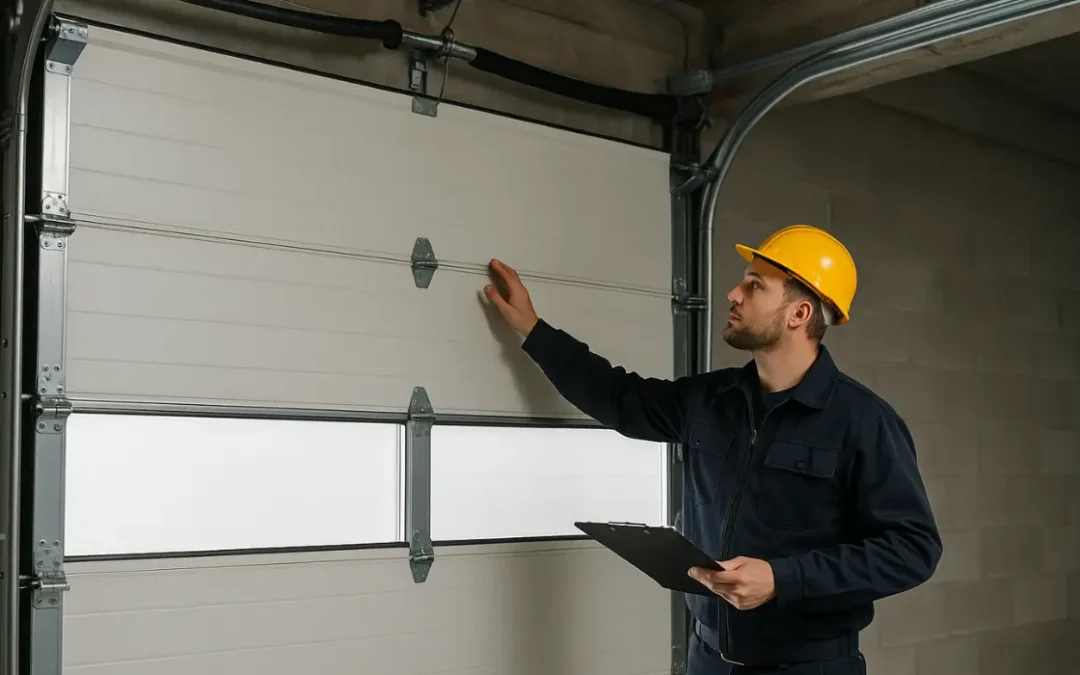
Once a garage door is installed under a permit, a garage door inspection in West Palm Beach, FL is required before the permit is closed. The inspection confirms that the installation matches what was approved in the permit application and that the door is installed in accordance with the product approval documents.
What the Inspector Checks
A garage door inspection typically covers:
Product identity. The inspector will confirm that the door installed matches the product approval referenced in the permit. Model numbers, sizes, and panel configurations are verified against the approval documentation.
Anchor and fastener installation. The attachment of the door’s frame to the rough opening, the installation of track brackets, and the fastener types and spacing are checked against the product approval installation requirements. This is where many non-compliant installations are identified, because the fastener pattern required by the product approval may differ from what an installer does by habit.
Hardware and track configuration. The track type, size, and attachment method must match the door’s product approval specifications. Using the wrong track or configuring it incorrectly can void the door’s rated performance even if the door panel itself is the right product.
Weather sealing. The bottom seal, side seals, and head seal installation are checked to confirm the door’s weather protection is complete.
Opener installation, if included. If the opener is part of the permitted scope, its installation, sensor alignment, and safety reversal function may be checked as part of the inspection.
Wind load rating documentation. The inspector may verify that the door’s rated wind load meets the requirement calculated for the installation address.
After the Inspection
If the inspection passes, the permit is closed and a record of the completed, inspected installation is created in the city or county’s building records. This record is accessible to future buyers, their agents, and their inspectors during a real estate transaction.
If the inspection reveals deficiencies, the contractor is responsible for correcting them and scheduling a re-inspection. A permit that is left open because a failed inspection was never corrected creates a problem that surfaces during a home sale and can delay or complicate closing.
What to Look for in a Garage Door Company in West Palm Beach, FL
The compliance side of a garage door replacement is only handled correctly if the contractor approaches it correctly from the start. Here is what to look for before hiring:
Licensed and insured. Florida requires garage door installers to hold a state contractor’s license or work under one. Verify the license number through the Florida Department of Business and Professional Regulation before signing a contract.
Permit-inclusive pricing. A reputable garage door company in West Palm Beach, FL includes permit fees and the permit application process in its standard scope. A contractor who treats permits as optional or bills them as unexpected extras is signaling how they approach compliance generally.
Product approval documentation. The contractor should be able to identify the product approval number for the door being specified and confirm that it is current in the Florida Product Approval database. If they cannot produce this number, they either do not know what it is or are not planning to use a compliant product.
NOA familiarity. For buyers who want the additional assurance of NOA-approved products, the contractor should understand what NOA approval is, be able to specify NOA-approved doors, and provide the current NOA number for the selected product.
Wind load calculation. The contractor should be able to confirm, before the permit application is submitted, that the selected door meets the design wind load requirement for the specific installation address. This is not a rough estimate. It is a documented calculation.
Inspection coordination. Pulling a permit without scheduling and completing the inspection is an incomplete job. A reputable contractor schedules the inspection, coordinates access, and ensures the permit is closed before considering the project finished.
The Risk of Skipping the Permit Process
Homeowners who skip the permit process, whether by hiring a contractor who does not pull permits or by attempting a self-installation without one, take on risks that extend well beyond a potential fine.
Code non-compliance. A door installed without a permit and inspection may not meet the wind load requirements for the installation address. That gap in performance may not be visible during routine use but becomes consequential during a storm event.
Insurance complications. If a storm damages a home and the garage door is found to be non-compliant or unpermitted, the insurance carrier may dispute the claim. Wind mitigation credits that were claimed based on the door may be challenged if the installation cannot be verified as code-compliant.
Real estate complications. An unpermitted installation appears as an open or missing permit in the property’s record. Buyers, their agents, and their lenders routinely check permit records. An unpermitted garage door installation can delay closing, require remediation as a condition of sale, or give a buyer grounds to renegotiate.
Warranty implications. Some manufacturer warranties require installation by a licensed contractor under a permit as a condition of coverage. An unpermitted installation may void the product warranty from the date of installation.
None of these risks are hypothetical. They are the predictable outcomes of an unpermitted installation in a regulated market, and they are the reason that working with a garage door company in West Palm Beach, FL that handles compliance as a standard part of the job is worth more than the permit fee itself.
Get the Compliance Side Right From the Start
Garage door replacement in West Palm Beach involves more steps than ordering a door and scheduling installation. The permit, the product approval, the wind load calculation, the inspection, and the closed permit record are all part of what a complete job looks like in this market.
All Glass Garage Doors handles every part of the compliance process as a standard part of our installation scope. We pull permits, specify products with current Florida product approvals, confirm wind load requirements for each address, and coordinate inspections through to a closed permit. Contact us to schedule a consultation and get a clear picture of what your replacement project requires.
FAQs
Do I need a permit to replace a garage door in West Palm Beach, FL?
Yes. In West Palm Beach and throughout Palm Beach County, a permit is required for garage door replacement. The permit process ensures the replacement door meets current Florida Building Code requirements for wind load resistance and is installed in accordance with the product’s approval documentation. This applies to like-for-like replacements, not just new installations.
What is a Palm Beach County garage door code requirement I should know about?
Palm Beach County adopts the Florida Building Code with local amendments. Key requirements include that the replacement door must carry a current Florida product approval, must be rated for the design wind speed at the specific installation address, and must be installed in accordance with the product approval’s installation instructions. The city of West Palm Beach processes permits through its Building Services department.
What does Florida Building Code require for garage doors?
The Florida Building Code requires that garage doors be rated for the design wind load at the installation address, covered by a current Florida product approval, and installed in a manner consistent with that approval. The code governs not just the product but the installation method, including anchor types, fastener spacing, and track configuration.
What is an NOA-approved garage door and do I need one in West Palm Beach?
NOA stands for Notice of Acceptance, and it is a product approval issued by Miami-Dade County for products meeting the High-Velocity Hurricane Zone testing standard. Palm Beach County is not a HVHZ jurisdiction, so NOA approval is not technically required in West Palm Beach. However, NOA-approved doors are often specified because they meet a rigorous testing standard, are recognized by insurance carriers for wind mitigation purposes, and provide buyers with a verifiable quality indicator during real estate transactions.
What happens during a garage door inspection in West Palm Beach, FL?
A garage door inspection confirms that the installed door matches the product referenced in the permit, that anchors and fasteners are installed per the product approval requirements, that the track and hardware configuration matches the approved specifications, and that weather sealing is complete. If an opener is part of the permitted scope, its installation may also be reviewed. A passed inspection results in the permit being closed and a record created in the city’s building records.
What is the replacement permit process in Florida for a garage door?
The process involves submitting a permit application with the property address, contractor license information, the Florida product approval number for the selected door, and installation documentation. The permit is reviewed and issued before work begins. After installation, an inspection is scheduled. If the inspection passes, the permit is closed. If it reveals deficiencies, corrections are made and a re-inspection is scheduled.
Can I replace my garage door myself without a permit in West Palm Beach?
It is not recommended. A garage door replacement without a permit in West Palm Beach leaves the installation unverified for code compliance, may create insurance complications if a storm occurs, will appear as an unpermitted installation in the property’s building records during a future home sale, and may void the manufacturer’s warranty. The permit process exists to confirm that the door meets the wind load requirements for your specific address.
How do I verify that a garage door has a current Florida product approval?
The Florida Department of Business and Professional Regulation maintains a public product approval database at floridabuilding.org. You can search by manufacturer, product type, or approval number to confirm that a specific door model and size range carries a current approval. Your contractor should provide the approval number for the door being specified before the permit application is submitted.
What happens if my garage door installation fails inspection?
If the inspection identifies deficiencies, the contractor is responsible for correcting them and scheduling a re-inspection. Common issues include fastener spacing that does not match the product approval requirements, incorrect track configuration, or hardware installation that does not follow the approval documents. A permit that is left open after a failed inspection becomes a problem in the property’s building record and must be resolved before the home can be sold.
Why does it matter if the permit is closed after a garage door replacement?
A closed permit creates a verifiable record in the city’s building records showing that the installation was completed, inspected, and found to be code-compliant. This record is checked by buyers, their agents, home inspectors, and lenders during real estate transactions. An open or missing permit record raises questions about whether the work was done correctly and can delay or complicate a home sale, sometimes requiring the seller to remediate the installation as a condition of closing.