
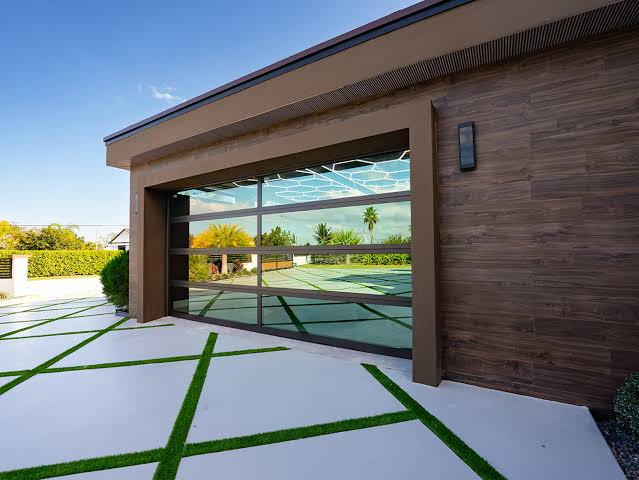
Most buyers searching for glass garage door cost in Florida expect a simple answer. What they get instead is a wide range of numbers with very little explanation of what actually separates a $3,000 door from a $15,000 one.
That gap is real, and it exists for reasons that matter. The frame grade, glass type, impact rating, opener class, and finish all affect the price. So does the climate the door has to perform in. A coastal Florida installation places demands on a garage door that an interior or northern installation simply does not, and the cost of ignoring those demands tends to show up later, not in the initial quote.
This guide breaks down glass garage door pricing by tier, explains the seven cost drivers most buyers miss, addresses why the lowest quote often costs the most over time in Florida’s environment, and covers the financing structures available through garage door manufacturers in Florida so buyers understand every option before signing.
Price Ranges by Tier: What You Are Actually Buying at Each Level
Glass garage door pricing in Florida does not follow a single scale. It follows a tiered structure where each level reflects different materials, performance ratings, and build quality. Understanding what each tier includes helps buyers compare quotes accurately instead of choosing by price alone.
Entry-Level Glass Garage Doors: $2,500 to $5,000 Installed
Entry-level glass garage doors typically use aluminum frames with a standard mill finish and single-pane or basic insulated glass panels. They are available in standard widths and heights, move on conventional track systems, and pair with standard residential openers.
At this tier, buyers get a door that looks like a glass garage door. What they may not get is impact resistance, meaningful thermal performance, corrosion-treated hardware, or the structural integrity to handle Florida’s wind load requirements in exposed coastal zones.
Entry-level doors work in low-exposure interior Florida settings where wind, salt air, and storm conditions are less severe. For buyers in coastal counties or hurricane-prone areas, this tier often means replacing or upgrading the door sooner than planned.
Mid-Range Glass Garage Doors: $5,000 to $9,000 Installed
Mid-range pricing reflects a meaningful step up in materials and performance. At this level, buyers typically see:
- Heavy-duty aluminum or thermally broken aluminum frames
- Dual-pane insulated glass with low-emissivity coatings
- Anodized or powder-coated finishes that resist corrosion better than mill finishes
- Compatibility with higher-class openers and smart hardware
- Improved weather sealing and track systems
This is where most Florida buyers in residential applications will find the best balance of performance and price. The door handles day-to-day coastal conditions more reliably, holds up better against humidity and salt air, and supports a longer service life without early replacement costs.
Custom Architectural Glass Garage Doors: $9,000 to $18,000 Installed
Custom architectural pricing reflects non-standard sizing, premium finishes, specialty glass selections, and design-driven builds where the door is a primary visual element of the home.
At this tier, buyers are typically specifying:
- Custom panel configurations and opening dimensions outside standard sizing
- Frameless or minimal-frame designs with structural glass
- Hurricane-rated or impact-rated glass that meets Florida Building Code requirements
- Anodized aluminum in custom colors or bronze, black, or architectural finishes
- Integration with high-end smart home systems
- Concealed or direct-drive opener systems matched to heavier door weights
Frameless glass garage door pricing sits at the higher end of this range because the structural engineering required to support glass panels without a traditional frame adds both material cost and installation complexity.
Full Luxury and Fully Custom Builds: $18,000 and Above
At the top tier, pricing reflects full architectural customization, premium glass specifications, high-end hardware, and complex installation requirements. Doors in this range often involve:
- Structural engineering review and custom fabrication
- Specialty glass such as low-iron ultra-clear, decorative laminated, or switchable privacy glass
- Fully integrated smart systems with dedicated openers, cameras, and home automation connections
- Custom powder coat or anodized finishes matched to architectural specifications
- Extra-wide or extra-tall openings requiring non-standard track and hardware systems
Custom garage door pricing in Florida at this level is driven primarily by the scope of specification, not by brand premium alone. A door this complex takes more time to design, fabricate, ship, and install, and those factors are reflected in the final number.
The Seven Cost Drivers Most Buyers Miss
When buyers compare glass garage door quotes in Florida, they often focus on the door itself. But the final installed price is shaped by a set of variables that do not always appear clearly in initial estimates. These are the seven most commonly overlooked cost drivers.
1. Frame Grade
Not all aluminum frames are the same. Standard-grade aluminum extrusions are lighter and less expensive. Heavy-duty commercial-grade or thermally broken frames cost more but offer significantly better structural performance and corrosion resistance.
In Florida’s coastal environment, frame grade affects how long the door maintains its finish, how well it resists wind load, and whether hardware attachment points hold up over years of use. A lower frame grade in a high-exposure location is not a neutral decision. It is a deferred cost.
2. Glass Type
Glass selection is one of the single largest variables in glass garage door installation cost. The options range from basic single-pane clear glass to multi-layer impact laminated panels with low-emissivity coatings, and the price difference between them is significant.
Common glass types and what they affect:
- Single-pane clear glass: lowest cost, no insulation, no impact protection
- Dual-pane insulated (IGU): better thermal performance, moderate cost increase
- Laminated safety glass: shatter-resistant, required in some building code applications
- Impact-rated laminated glass: meets Florida Building Code wind and impact requirements, highest cost in this category
- Low-iron ultra-clear glass: higher optical clarity, premium pricing for luxury applications
- Frosted, tinted, or decorative glass: varies by treatment, adds cost over clear equivalents
Buyers comparing quotes should confirm which glass specification is included in each number. A quote with single-pane glass and a quote with impact-rated dual-pane glass are not comparable prices for the same product.
3. Impact Rating
Florida’s wind load and impact resistance requirements vary by county and by proximity to the coast. In High-Velocity Hurricane Zones, which include Miami-Dade and Broward counties, garage doors must meet specific impact and pressure ratings to comply with the Florida Building Code.
A door that meets Miami-Dade NOA (Notice of Acceptance) requirements costs more than one that does not. That cost reflects the engineering, testing, and materials required to achieve the rating. It also affects insurance eligibility, permit approval, and whether the door provides the protection it appears to offer during a storm event.
Buyers who are quoted a lower price without a clear impact rating should ask specifically whether the door meets the code requirements for their county. A door that fails inspection or requires replacement after a storm is not a savings.
4. Opener Class
The opener that moves a glass garage door is not a uniform product. Glass doors are heavier than standard steel or wood doors, and the opener must be matched to the door’s actual weight to function correctly and avoid accelerated wear.
Opener pricing moves with power rating, drive type, and smart capability. A belt-drive opener with Wi-Fi connectivity and a camera integration costs significantly more than a standard chain-drive unit. A direct-drive opener matched to a heavy full-view glass door costs more still.
When reviewing quotes, confirm what opener is included and whether its weight capacity matches the specified door. An undersized opener is a cost that reappears quickly in service calls and early replacement.
5. Custom Sizing
Standard garage door sizes fit most openings, but many Florida homes, particularly custom builds, older properties with non-standard openings, and homes with RV bays or multi-car garages, require custom sizing. Custom sizing adds fabrication cost and typically extends lead time.
The cost impact of custom sizing varies by how far outside standard dimensions the opening falls. An opening that is a few inches wider than standard adds less cost than a full custom engineering specification for an extra-tall or extra-wide bay. Buyers should confirm whether their opening requires custom sizing early in the process, because this variable affects the total number significantly.
6. Finish
The finish on an aluminum-framed glass garage door affects both appearance and long-term performance. The main finish types available from garage door manufacturers in Florida include:
- Mill finish: unpainted aluminum, lowest cost, least corrosion resistance
- Anodized finish: electrochemical treatment that hardens the surface and improves corrosion resistance, mid-range cost
- Powder coat: durable painted finish available in a wide color range, good corrosion resistance with proper application, most common choice at mid and upper tiers
- Custom powder coat or anodized match: color-matched to architectural specifications, highest cost in this category
In Florida’s salt air environment, finish selection directly affects how the door looks and performs five to ten years after installation. A mill finish door in a coastal location will show corrosion signs that an anodized or powder-coated door in the same environment will not.
7. Smart Hardware
Smart garage door hardware adds real cost and real value, but it is not always itemized clearly in quotes. Components that affect the total include:
- Wi-Fi-enabled opener with app control
- Integrated or add-on camera
- Smart home platform compatibility hardware
- Surge protection accessories
- Keypad entry or access control panels
Buyers comparing quotes should confirm what smart hardware is included versus what is an add-on, and whether the smart components specified are appropriate for Florida’s humidity and electrical environment.
Why the Cheapest Quote Costs More Long-Term in Coastal Florida
Premium garage door cost breakdowns often look like overspending on paper. In Florida’s coastal climate, they frequently represent the opposite.
The factors that drive down initial quotes, lighter frames, single-pane glass, standard finishes, no impact rating, undersized openers, are the same factors that accelerate wear, increase maintenance frequency, reduce storm resilience, and often trigger early replacement.
A door installed in Tampa, Fort Lauderdale, or any coastal Florida market is exposed to salt air, humidity cycling, UV radiation, and storm conditions that do not exist in most other parts of the country. Those conditions affect every material in the door assembly, and materials not specified for that environment show it within a few years.
The comparison that matters is not the initial quote against another initial quote. It is the total cost over ten years, including maintenance, service calls, hardware replacement, and whether the door needs to be partially or fully replaced before the end of its expected service life.
A mid-range door with the right frame grade, appropriate glass, proper finish, and correctly matched opener installed once and maintained normally will cost less over a decade than a low-tier door that requires significant service at year three and replacement at year seven.
Garage door manufacturers in Florida who work regularly in coastal markets understand this dynamic. Their specifications and their pricing reflect it.
Financing Structures Available Through Florida Manufacturers
Glass garage door installation cost does not have to be a single upfront payment. Most reputable garage door manufacturers in Florida and their authorized dealers offer or facilitate financing structures that make higher-tier specifications accessible without requiring full cash payment at signing.
Dealer-Arranged Financing
Many Florida garage door dealers partner with third-party lenders to offer installment financing at the point of sale. These programs typically offer:
- Fixed monthly payments over 12 to 60-month terms
- Promotional zero-interest periods for qualified buyers, commonly 12 to 18 months
- Application and approval at the time of the quote
Promotional zero-interest periods require the balance to be paid in full before the period ends to avoid deferred interest charges. Buyers should confirm the terms clearly before accepting this structure.
Home Improvement Loans
Personal home improvement loans through banks, credit unions, or online lenders are a common alternative. These loans are unsecured in most cases, meaning they do not require the home as collateral, and they offer fixed rates and terms that are independent of the dealer.
For buyers with strong credit, a home improvement loan can provide a lower interest rate than dealer-arranged financing, particularly outside promotional periods.
HELOC and Home Equity Financing
For larger projects at the custom architectural or luxury tier, a home equity line of credit or home equity loan can fund the installation at rates typically lower than personal loans or dealer financing. This structure makes sense when the garage door is part of a broader renovation or when the project cost justifies using home equity.
The tradeoff is that the home serves as collateral, and the timeline for approval is longer than dealer-arranged financing.
Manufacturer Programs
Some garage door manufacturers in Florida offer their own financing programs through affiliated lenders. These programs may include terms not available through generic lenders, including deferred payment options during fabrication and lead time periods. Buyers should ask specifically whether the manufacturer has a financing program before assuming all financing goes through the dealer.
How to Read a Glass Garage Door Quote Line by Line
A quote from a garage door company should be specific enough to tell you exactly what you are buying. If it is not, that is the first problem to solve before comparing numbers across companies.
Here is what a complete quote should include and what to look for in each line:
Door Model and Manufacturer The quote should name the specific model and manufacturer, not a generic description like “aluminum glass door.” A named model ties the quote to published specifications you can verify independently.
Panel Configuration and Size How many panels, what dimensions, and whether the sizing is standard or custom. If custom sizing is involved, confirm that the custom fabrication cost is included.
Glass Specification The glass type, pane count, coating, and impact rating should appear explicitly. If the quote says only “glass panels,” ask for the full specification. This is where the most significant price differences between quotes are hidden.
Frame Grade and Finish The frame material, extrusion grade, and finish type. Anodized, powder coat, or mill finish should be stated, along with the color or finish code if custom.
Impact and Wind Load Rating The door’s rated performance and whether it meets Florida Building Code requirements for the installation county. If your county requires NOA compliance, confirm this is documented.
Opener Model and Weight Compatibility The specific opener model, drive type, horsepower or force rating, and confirmation that it is rated for the door’s weight. Smart features included should be listed individually.
Installation Scope What the installation covers: removal and disposal of the existing door, track installation, hardware mounting, sensor calibration, opener programming, and final testing. Vague installation line items hide significant cost variation.
Permit and Inspection Fees Whether permit fees are included in the quote or billed separately. In Florida, garage door permits are required in most jurisdictions, and the cost should be accounted for somewhere in the total.
Warranty Terms The warranty coverage for the door, the opener, and the installation labor. The duration and what each covers should be documented, not described verbally.
Total Installed Price The final number should reflect everything above. If the quote includes a “starting at” price or a conditional total, ask what would change it and get the complete number in writing.
Get a Clear Number Before You Commit
Understanding glass garage door cost in Florida means understanding what you are comparing when quotes come in at different levels. The variables that drive the price are real, and they affect how the door performs, how long it lasts, and what it costs to own over time in Florida’s environment.
All Glass Garage Doors works with homeowners and builders across Florida to specify and install glass garage doors at every price tier. We provide detailed quotes that itemize every cost driver so buyers can make an informed comparison. Contact us to schedule a consultation and get a complete, transparent number for your project.
FAQs
How much do glass garage doors cost in Florida?
Glass garage door cost in Florida ranges from roughly $2,500 to $5,000 installed at the entry level, $5,000 to $9,000 at the mid-range, $9,000 to $18,000 for custom architectural designs, and $18,000 or more for fully custom luxury builds. The final number depends on frame grade, glass type, impact rating, sizing, finish, opener class, and smart hardware.
What is included in glass garage door installation cost?
A complete installation should include the door panels and frame, hardware, opener, track system, removal and disposal of the existing door, permit fees, and final calibration and testing. Buyers should confirm each of these is included before comparing totals across quotes.
What drives the price difference between a $4,000 and a $12,000 glass garage door?
The main drivers are frame grade, glass specification (single-pane versus impact-rated dual-pane), impact and wind load rating, finish type (mill versus powder coat or anodized), opener class, custom sizing, and smart hardware. Each of these adds cost and also adds performance, longevity, or code compliance that a lower-priced door may not provide.
Do glass garage doors in Florida need to be impact-rated?
It depends on the county and the home’s location. In High-Velocity Hurricane Zones, including Miami-Dade and Broward counties, impact and wind load ratings are required under the Florida Building Code. In other counties, requirements vary. Buyers should confirm what their specific jurisdiction requires before accepting a quote that does not specify an impact rating.
What is a frameless glass garage door and why does it cost more?
A frameless glass garage door uses structural glass panels with minimal or concealed framing rather than a visible aluminum frame around each panel. The result is a cleaner, more transparent aesthetic. The higher cost reflects the engineering required to support glass without a traditional frame, the heavier structural glass required, and the more complex installation.
Is garage door financing available in Florida?
Yes. Most reputable garage door manufacturers in Florida and their dealers offer dealer-arranged financing through third-party lenders, often with promotional zero-interest periods for qualified buyers. Home improvement loans, HELOCs, and manufacturer-affiliated programs are also available options depending on the project scope.
Why does the cheapest glass garage door quote often cost more over time?
Lower-priced doors typically use lighter frames, single-pane glass, standard finishes, and entry-level openers that wear faster in Florida’s coastal environment. Salt air, humidity, UV exposure, and storm conditions accelerate the deterioration of materials not specified for those conditions. A door that requires significant service at year three or replacement at year seven is more expensive over ten years than a properly specified mid-range door installed once.
What should I look for when reading a glass garage door quote?
A complete quote should name the specific door model and manufacturer, list the glass specification and impact rating, identify the frame grade and finish, confirm the opener model and its weight compatibility, detail what the installation includes, and state the warranty terms for the door, opener, and labor. Vague or bundled line items make it impossible to compare quotes accurately.
How long do glass garage doors last in Florida?
A properly specified and maintained glass garage door in Florida should last 15 to 25 years depending on exposure level, material quality, and maintenance frequency. Doors with appropriate finishes, corrosion-resistant hardware, and impact-rated glass in coastal environments will reach the upper end of that range. Doors with entry-level specifications in high-exposure locations will not.
What is the best glass type for a garage door in Florida?
For most Florida installations, dual-pane insulated glass with a low-emissivity coating and laminated impact resistance provides the best balance of thermal performance, safety, and storm protection. In counties with strict building code requirements, impact-rated glass meeting NOA standards is required. For high-end applications where visual clarity is a priority, low-iron ultra-clear glass with impact lamination is the top specification.