
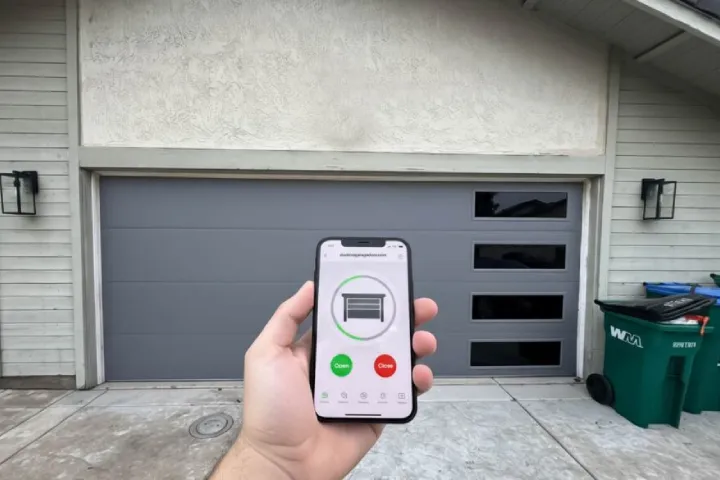
A garage door used to open when you pressed a button and close when you pressed it again. That was the full feature set.
Today, the right smart garage door opener in Florida can tell you whether the door is open from a different state, close it automatically when your car pulls into the driveway, trigger lights or locks the moment it moves, and log every open and close event with a timestamp.
That is not a gimmick. For Florida homeowners with glass garage doors where visibility, aesthetics, and climate all intersect, smart integration is becoming part of what separates a well-specified door from one that just fills the opening.
But smart capability is not uniform. It ranges from basic Wi-Fi connectivity to full home automation integration, and the right tier depends on your home setup, your glass door configuration, and how Florida’s environment affects the hardware doing the work.
This guide covers the four smart capability tiers buyers should evaluate, what glass-specific installation factors actually matter for smart components, what Florida’s humidity and electrical environment does to smart hardware, and a specification checklist you can take into any conversation with garage door manufacturers in Florida.
The Four Smart Capability Tiers to Evaluate
Not every smart garage door opener offers the same level of control or integration. Before comparing manufacturers or products, it helps to understand what tier of capability you actually need.
Tier 1: Wi-Fi Connectivity and Remote Monitoring
This is the entry point for smart garage door technology. A Wi-Fi garage door manufacturer or retrofit kit connects the opener to your home network and gives you remote access through a smartphone app.
At this tier, you can:
- Open and close the door from anywhere with a data connection
- See the door’s current status in real time
- Receive alerts when the door opens, closes, or is left open past a set time
- Share access with family members or service providers through guest credentials
This is where products like MyQ, LiftMaster’s connected platform, operate at the base level. A MyQ glass garage door setup links the opener to the app and gives homeowners a live status view and remote control without requiring a full smart home system.
For buyers who want basic peace of mind and remote access without committing to a broader automation platform, Tier 1 is often the right starting point.
Tier 2: App-Controlled Scheduling and Notifications
Tier 2 builds on connectivity by adding behavior-based controls and smarter alerting.
An app-controlled garage door at this level lets you:
- Set auto-close timers so the door closes after a defined period if left open
- Schedule open and close windows, which is useful for recurring deliveries or service visits
- Create activity logs that track who opened the door and when
- Set custom alert thresholds, such as notifying you if the door opens during overnight hours
This tier suits households where multiple people use the garage on different schedules, or where homeowners want operational control beyond simple open-and-close commands.
Tier 3: Geofencing and Location-Based Automation
Geofencing garage door technology uses your smartphone’s location data to trigger door actions automatically based on where you are, with no button press required.
At Tier 3:
- The door can open as your car approaches and you enter a defined geographic boundary
- It can close automatically once you leave the boundary
- You can set location-aware notifications that differ from standard alerts
- Some systems allow presence detection across multiple household members
Geofencing is particularly useful for Florida homeowners who frequently load and unload vehicles in the garage. It is a common scenario with beach gear, sports equipment, or work materials, and it removes the need to manage the opener manually during every trip.
The tradeoff is that geofencing depends on consistent smartphone GPS accuracy and battery reliability, both of which can vary.
Tier 4: Full Smart Home Garage Integration
At the highest tier, the garage door becomes a node in a broader home automation ecosystem. Smart home garage integration connects the opener to platforms like Amazon Alexa, Google Home, Apple HomeKit, or dedicated systems like Control4 and Savant.
At Tier 4, the door can:
- Open and close via voice command
- Trigger automations in other systems, such as lights turning on when the garage opens, the thermostat adjusting when you arrive home, or locks engaging when the door closes
- Participate in leaving-home and arriving-home routines that affect multiple devices simultaneously
- Appear as a controllable device in a unified home dashboard
For buyers building or upgrading a connected home in Florida, Tier 4 integration is the most capable option. It also requires the most careful setup and compatibility verification between the opener, the hub, and the glass door’s hardware configuration.
Glass-Specific Integration Considerations That Often Get Overlooked
Smart technology adds capability. But glass garage doors introduce specific installation variables that affect how well that technology performs. These are the factors buyers and garage door manufacturers in Florida need to address during the specification phase.
Sensor Placement on Glass Panels
Standard garage door safety sensors mount to the door tracks near the floor and project a beam across the opening. On most doors, this is straightforward.
On frameless or full-view glass garage doors, the panel structure itself offers fewer mounting points and different sightline geometry. Sensors that work without adjustment on a traditional steel door may need repositioning on a glass configuration to maintain a clear, unobstructed beam path.
Misaligned or obstructed sensors cause exactly the kind of reversing and erratic closing behavior that looks like an opener malfunction but is actually a placement problem. During installation, confirm that sensor brackets are compatible with the track style the glass door requires and that the beam path is unobstructed at all door positions.
Opener Weight Class for Glass Doors
Glass garage doors, particularly full-view aluminum-framed or frameless glass designs, are heavier per square foot than comparable steel or wood doors. A standard residential opener rated for lighter door weights will work harder, wear faster, and may struggle with consistent operation if undersized.
The smart opener for a glass garage door should be matched to the door’s actual weight and size, not just the opening dimensions. Manufacturers that specialize in glass doors will typically specify compatible opener weight classes as part of the product documentation. Buyers evaluating Wi-Fi garage door manufacturers should confirm that smart opener options are available in the appropriate drive type and horsepower rating for the specific glass door being installed.
Direct-drive openers are often a good fit for glass doors because they have fewer moving parts, operate more quietly, and handle heavier loads with less vibration. That matters when the door is largely transparent and any shudder or misalignment is immediately visible.
Camera Mounting on Frameless Glass Designs
A garage door camera in Florida is increasingly common as part of a smart setup. It provides a visual record of who enters and exits and lets homeowners see inside the garage remotely.
On frameless glass doors, camera mounting presents a design challenge that traditional doors do not have. There are no opaque panels to mount hardware on without affecting the aesthetic, and the transparent surface makes placement more visible from the outside.
Practical options include:
- Mounting the camera on the opener rail or header above the door opening rather than on the door itself
- Using a separate camera positioned inside the garage to cover the door and entry zone
- Selecting an opener model that includes an integrated camera unit within the opener head, such as LiftMaster’s Smart Garage Camera series
Whatever placement is chosen, the camera’s field of view should cover the full door opening, the entry path, and ideally part of the driveway. Confirm that the camera’s resolution and night vision capability are appropriate for the lighting conditions in the specific garage orientation. South-facing garages in Florida receive intense afternoon sun that can create glare and exposure challenges for lower-quality camera sensors.
Florida Environmental Factors That Affect Smart Garage Hardware
Florida’s climate is not neutral for electronics. Buyers selecting smart openers and connected components should account for three environmental factors that affect long-term reliability.
Humidity and Corrosion Resistance
Florida’s humidity, especially in coastal areas and during summer months, accelerates corrosion on metal components and degrades seals and circuit boards over time. Smart garage components that perform adequately in drier climates may fail earlier in Florida’s environment.
When evaluating openers and smart accessories, look for:
- Enclosures rated for high-humidity environments
- Corrosion-resistant hardware on external mounting points
- Manufacturers that specifically address Florida or coastal suitability in their product documentation
Internal components like Wi-Fi modules, control boards, and sensors are particularly vulnerable when housed in non-climate-controlled garages that experience significant temperature swings between air-conditioned interior and outdoor heat.
Surge Protection
Florida leads the continental United States in lightning strike frequency. A direct or nearby strike can send voltage spikes through power lines and connected devices, and smart garage openers with their Wi-Fi modules and integrated circuit boards are more vulnerable than basic mechanical openers.
Surge protection for garage electronics is not optional in Florida. This means:
- Using a quality surge protector on the outlet powering the opener
- Considering a whole-home surge protection device at the electrical panel
- Checking whether the opener manufacturer offers surge protection accessories or has built-in protection features
- Verifying that the smart components are covered under warranty for surge-related damage, or understanding where the coverage boundary is
An opener that costs several hundred dollars more than a basic model is not a good investment if one summer storm ends its useful life and voids the warranty.
Antenna Performance and Signal Reliability
Smart garage openers rely on Wi-Fi signal to function as advertised. In a detached garage or a structure with concrete block walls, which are common in Florida construction, Wi-Fi signal attenuation can be significant enough to cause intermittent connectivity issues.
Before finalizing a smart opener selection, verify:
- The Wi-Fi frequency band the opener uses (2.4 GHz typically offers better range through walls than 5 GHz)
- Whether a Wi-Fi extender or mesh node will be needed to maintain reliable signal in the garage
- Whether the opener supports a wired ethernet connection as a backup or primary option
- The location of the opener’s antenna relative to the garage walls and signal source
An app-controlled garage door that loses connectivity unpredictably is functionally unreliable. In Florida’s storm season, reliable remote monitoring matters most exactly when conditions are at their worst.
Smart Garage Door Specification Checklist for Comparing Florida Manufacturers
Use this checklist when evaluating garage door manufacturers in Florida or comparing smart opener options. It covers the questions that matter most for a glass door installation in a Florida environment.
Smart Capability
- What tier of smart capability does the opener support: basic Wi-Fi, scheduling, geofencing, or full smart home integration?
- Which smart home platforms does the opener integrate with (Alexa, Google Home, Apple HomeKit, others)?
- Is the associated app available for both iOS and Android and actively maintained?
- Does the opener support multiple user accounts and guest access?
- Is there an auto-close feature and how is it configured?
- Does the system include activity logging with timestamps?
Glass Door Compatibility
- Is the opener rated for the weight class of the specific glass door?
- What drive type is recommended for this door (belt, chain, direct drive)?
- Are the safety sensors compatible with the track style the glass door requires?
- Has the manufacturer confirmed sensor placement works correctly for frameless or full-view configurations?
- Is a camera included or compatible, and where is the recommended mounting point?
Florida Environmental Readiness
- Is the opener and associated hardware rated or recommended for high-humidity environments?
- Does the manufacturer address Florida or coastal installation in their documentation?
- What surge protection does the opener include or require?
- What is the warranty coverage for electrical or environmental damage?
- What Wi-Fi frequency band does the opener use and what is the recommended signal strength at the installation location?
- Does the opener support a Wi-Fi extender or wired connection option?
Installation and Post-Sale Support
- Is the installer trained and authorized for the specific opener brand and model?
- Will sensor alignment and opener force settings be calibrated and tested before handoff?
- Is there a documented warranty that covers both the product and the installation?
- What is the process for post-install service requests?
A Smart Opener Is Only as Good as the Installation Behind It
The technology in a modern smart garage door opener is genuinely capable. Remote monitoring, geofencing, home automation integration, and camera access are features that add real value, not marketing checkboxes.
But smart capability does not compensate for poor installation. A MyQ glass garage door setup with improperly placed sensors will reverse unpredictably. A geofencing garage door on an undersized opener will wear through hardware faster than it should. A garage door camera in Florida mounted without regard for sun exposure will produce unusable footage at exactly the hours it is needed most.
The specification decisions matter as much as the product decisions. In Florida’s climate, where humidity, lightning, and heat apply ongoing pressure to every electronic component in the garage, those decisions matter more than they would elsewhere.
Get the Right Smart Setup for Your Glass Garage Door
If you are evaluating smart garage door options for a glass door installation in Florida, the right starting point is a conversation about your specific configuration, not a generic product recommendation. All Glass Garage Doors works with homeowners to identify the correct opener weight class, confirm sensor and camera placement for glass-specific designs, and specify smart components that are suited to Florida’s environment. Contact us to schedule a consultation and get a clear answer on what your installation actually requires.
FAQs
What should I look for in a smart garage door opener in Florida?
Look for Wi-Fi connectivity in the 2.4 GHz band for better range through concrete walls, humidity-resistant components, surge protection compatibility, and support for the smart home platform you use. Florida’s lightning frequency and high humidity make surge protection and environmental ratings more important here than in most other states.
Can I use a MyQ glass garage door system with a frameless glass design?
MyQ and similar connected systems are compatible with most opener models and door types, including glass doors. The key considerations are matching the opener’s weight capacity to the glass door’s actual load and confirming that safety sensors can be correctly positioned for a frameless or full-view configuration. The app and connectivity features work independently of door type.
What is geofencing and how does it work with a garage door?
Geofencing uses your smartphone’s GPS location to define a geographic boundary around your home. When your phone crosses that boundary while arriving or leaving, the garage door opener can automatically open or close without any manual input. Setup requires enabling location permissions in the garage door app and defining the boundary radius that works for your driveway approach.
Does smart home garage integration work with all major platforms?
Most leading smart openers support Amazon Alexa and Google Home. Apple HomeKit compatibility is less universal, so confirm it specifically if HomeKit is your primary platform. For dedicated home automation systems like Control4 or Savant, check whether the opener manufacturer offers a certified integration or driver before purchasing.
How does Florida’s humidity affect smart garage door components?
High humidity accelerates corrosion on metal hardware, degrades seals, and can affect circuit boards and Wi-Fi modules, especially in garages that are not climate-controlled. Look for openers with housings designed for high-humidity environments and confirm that external mounting hardware is corrosion-resistant. Coastal installations face the highest risk and may require more frequent inspection.
Where should a garage door camera be mounted on a glass door?
For frameless or full-view glass doors, mounting the camera on the door itself is impractical and aesthetically disruptive. Better options include mounting on the opener rail or garage header above the opening, or using a separate fixed camera inside the garage that covers the door and entry path. Some opener models, like certain LiftMaster units, include an integrated camera in the opener head, which is often the cleanest solution for glass door installations.
What surge protection do I need for a smart garage door opener in Florida?
At minimum, use a quality surge-protected outlet or plug-in surge protector rated for electronics at the opener’s outlet. For stronger protection, a whole-home surge protection device installed at the electrical panel is a better long-term solution. Check your opener’s warranty to understand whether surge-related damage is covered and what exclusions apply.
How do I know if my Wi-Fi signal is strong enough for a smart garage opener?
Test the signal strength in the garage with your smartphone before installation. Most smart openers need a stable 2.4 GHz signal to function reliably. If signal is weak, which is common in detached garages or concrete block structures, add a Wi-Fi extender or mesh node in or near the garage. Some openers also support a direct ethernet connection, which eliminates the wireless variable entirely.
What opener weight class do I need for a glass garage door?
Glass doors are heavier per square foot than most steel or wood doors. A standard residential opener rated for lighter loads may be undersized for a full-view or frameless glass design. The correct weight class and drive type should be confirmed against the door’s actual specifications, not just the opening dimensions. Your installer or the door manufacturer’s documentation should specify compatible opener ratings.
Why does the installation matter as much as the smart opener itself?
Smart technology adds features, but it does not correct installation problems. Improperly placed sensors cause erratic reversing. An undersized opener wears faster and operates inconsistently. Poor Wi-Fi placement causes connectivity drops at inconvenient times. A well-specified smart opener installed correctly performs as advertised. The same opener installed carelessly creates ongoing frustration regardless of its feature set.